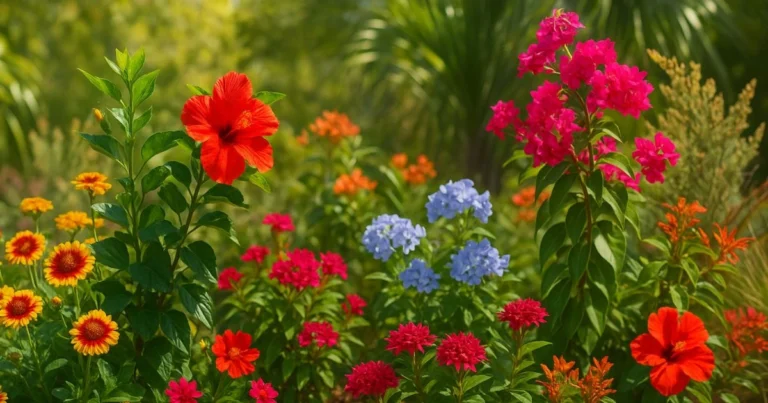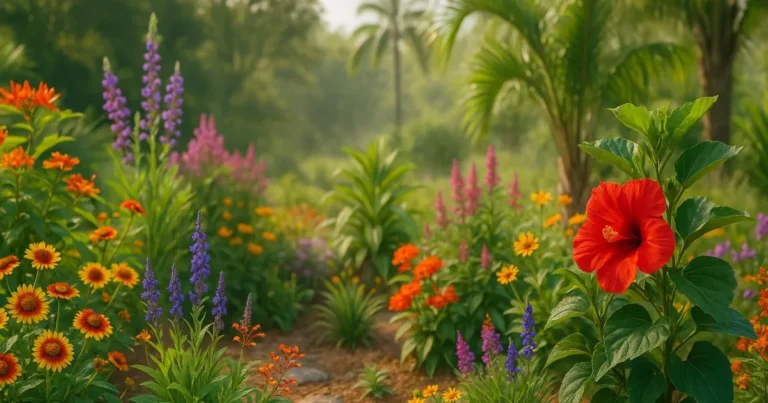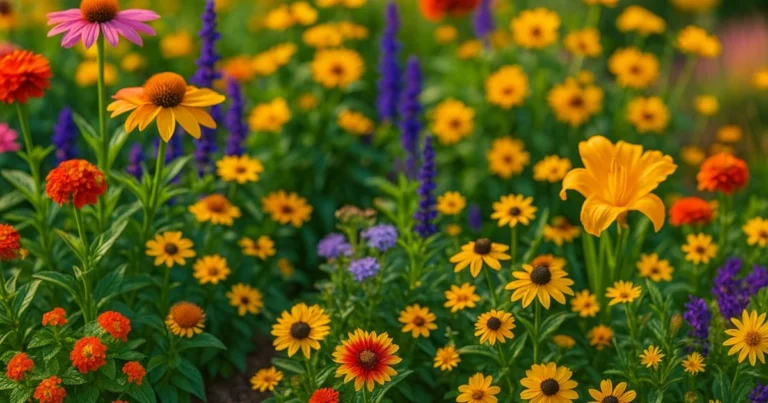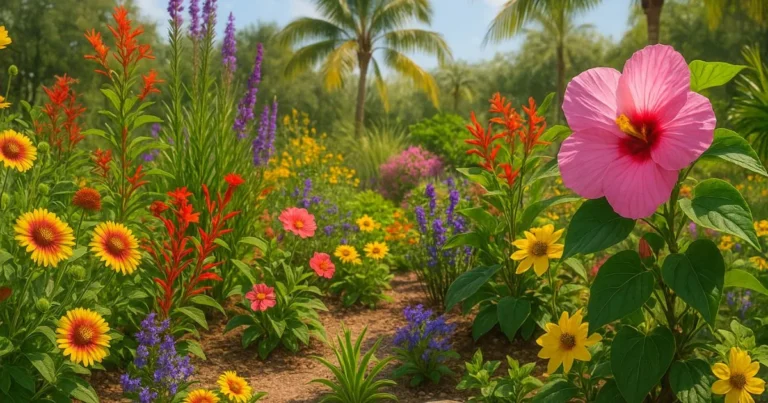
17 Best Outdoor Plants for Texas to Build a Heat-Proof, Low-Maintenance Garden (Complete Texas Flower Gardening Guide)
Finding Beauty in the Texas Heat: The Moment You Realize Your Garden Can Thrive Here
Outdoor plants for Texas—you might search for those words after walking outside in July and seeing your flower beds look like they’ve given up. If you’ve lived here long enough, you know the feeling: the sun sits directly on your shoulders, the air feels thick and unmoving, and the plants you once cared for eagerly now look tired, limp, and scorched.
I remember that moment in my own garden. Every plant I’d lovingly tucked into the soil earlier that spring had surrendered long before the heat peaked. But tucked against the back fence was one survivor—an unexpected burst of color from a lantana plant I had nearly forgotten about. It was glowing, thriving, and barely flinching at the heat that destroyed everything else.
That was the moment I realized: the key isn’t fighting the Texas climate. The key is choosing outdoor plants for Texas that are built for this landscape—plants that don’t merely withstand heat but embrace it.
This guide takes you through exactly how to choose, plant, and maintain flowers and ornamentals that flourish in every part of the state. Whether you garden in North Texas winds, Central Texas limestone soil, East Texas piney woods, or the scorching West Texas sun, you’ll find plants here that keep your landscape colorful all year long.
Table of Contents
Understanding Texas Climate Before Choosing Outdoor Plants
Before deciding which outdoor plants for Texas belong in your garden, you need to understand what they’re up against. Texas isn’t one climate—it’s multiple climates stitched together, and that’s why plant selection matters more here than in many other states.
Texas Growing Zones (6b–10a)
Texas includes:
- Zone 6b–7a (North Texas – Dallas/DFW, Panhandle)
- Zone 8a–8b (Central Texas – Austin, Waco, Hill Country)
- Zone 8b–9a (East Texas – Tyler, Lufkin)
- Zone 9a–9b (South Texas – San Antonio, Gulf Coast)
- Zone 10a (Deep South Texas – Brownsville, Rio Grande Valley)
Each zone brings its own challenges—frosts in the north, humidity in the east, alkaline soil in the center, and desert conditions in the west.
Why This Climate Matters to Plant Selection
Outdoor plants for Texas must handle:
- Long heat streaks above 100°F
- Drought periods lasting weeks
- Flash flooding in some areas
- Poor, rocky, or clay soil
- Occasional freezes
- High humidity or extreme dryness depending on region
Understanding your region ensures you’ll choose plants that don’t just survive—they thrive.
Helpful resource:
Texas A&M AgriLife Extension Plant Advice
👉 https://agrilifeextension.tamu.edu/
Best Outdoor Plants for Texas (Heat-Tolerant, Drought-Ready Choices)
Below are the toughest, longest-lasting, and most rewarding outdoor plants for Texas, sorted by category for easy planning.
Heat-Loving Perennials That Come Back Every Year
1. Lantana
A vibrant, butterfly-attracting favorite that thrives even in triple-digit heat.
2. Esperanza (Yellow Bells)
Dramatic yellow blooms that glow in full sun and endure drought with ease.
3. Mexican Bush Sage
Purple velvet-like flowers that resist heat and low water.
4. Black-Eyed Susan
A cheerful, resilient flower that blooms into fall.
5. Turk’s Cap
A hummingbird favorite that handles both shade and full sun.
6. Purple Coneflower
Deep-rooted, drought-tolerant, and ideal for pollinators.
Best Outdoor Plants for Texas Full Sun
These plants love intense sun:
7. Blanketflower (Gaillardia)
Thrives in poor soil and heat.
8. Firebush
Great for South & Central Texas; hummingbirds adore it.
9. Salvia Greggii
Heat-tolerant perennial with bright blooms.
10. Texas Star Hibiscus
Tropical look without tropical watering needs.
Drought-Proof Outdoor Plants for Texas
11. Desert Marigold
Perfect for West Texas and rocky soils.
12. Verbena
Low-growing, colorful, and drought tolerant.
13. Texas Sage
A true desert survivor; blooms beautifully after rainfall.
14. Prickly Pear Cactus
Beautiful blooms and low maintenance; iconic Texas option.
Outdoor Plants for Texas Shade or Partial Shade
Shade doesn’t have to mean dull. These plants bring color where the sun can’t reach.
15. Caladium
Large, dramatic foliage for shaded patios.
16. Coleus
Bright foliage that thrives in dappled light.
17. Columbine
Perfect for woodland-style East Texas gardens.
Bonus: Hostas & Ferns (East Texas Only)
Great for humidity and shade—avoid in Central/West Texas due to heat stress.
Regional Guide: Best Outdoor Plants for Texas by Location
Choosing outdoor plants for Texas based on your region helps ensure long-term success.
North Texas (DFW, Sherman, Wichita Falls)
Climate: Heat + cold
Best plants:
- Lantana
- Salvia Greggii
- Zinnias
- Asters
- Coneflower
Central Texas (Austin, San Marcos, Hill Country)
Climate: Dry, alkaline, rocky soil
Best plants:
- Blackfoot Daisy
- Esperanza
- Texas Lantana
- Autumn Sage
East Texas (Tyler, Beaumont, Lufkin)
Climate: High humidity + acidic soil
Best plants:
- Azaleas
- Hydrangeas
- Ferns
- Caladiums
West Texas (Midland, Odessa, El Paso)
Climate: Dry, desert-like
Best plants:
- Desert Marigold
- Yucca blooms
- Verbena
- Agave
South Texas / Gulf Coast (Houston, Corpus, RGV)
Climate: Tropical heat + salty winds
Best plants:
- Plumbago
- Bougainvillea
- Hibiscus
- Firebush
Soil Preparation for Growing Outdoor Plants in Texas
Texas soils are wildly diverse, but they can all be improved.
Understanding Soil Types
Central Texas (Hill Country)
- Limestone-rich
- Needs organic matter
East Texas
- Acidic, sandy
- Needs mulch + compost
North/South Texas
- Heavy clay
- Needs expanded shale + compost
West Texas
- Rocky, low fertility
- Needs compost + mulch
How to Improve Texas Soil
- Add 2–4 inches of compost yearly
- Incorporate aged manure
- Add expanded shale for drainage in clay soil
- Mulch with hardwood or pine bark
- Loosen compacted soil to improve root growth
Texas A&M Soil Testing Laboratory:
👉 https://soiltesting.tamu.edu/
Watering & Maintenance Strategies for Texas Heat
Watering wisely can save your garden—and your water bill.
Best Watering Practices
- Water deeply 1–2 times weekly
- Water early morning
- Use drip irrigation to avoid evaporation
- Avoid watering leaves directly to prevent fungal disease
Why Mulching Is Essential
Mulch protects roots and keeps soil moist.
Best mulches for Texas:
- Hardwood mulch
- Pine bark
- Gravel mulch (great for xeriscaping)
Best Containers & Placement for Outdoor Plants in Texas
Container gardening works beautifully for Texas flower gardens.
Best Containers for Heat
- Glazed ceramic (best for temperature control)
- Thick plastic (retains moisture)
- Whiskey barrels (great depth)
- Fabric pots (excellent drainage)
Best Placement
- Give containers morning sun
- Provide afternoon shade
- Keep off hot concrete
- Elevate for airflow
Pollinator-Friendly Outdoor Plants for Texas
Pollinators thrive when you choose heat-tolerant native plants.
Top Picks
- Milkweed
- Lantana
- Salvia Greggii
- Flame Acanthus
- Mexican Heather
- Purple Coneflower
Explore the Wildflower Center’s plant database:
👉 https://www.wildflower.org/
Common Mistakes in Texas Flower Gardening & How to Fix Them
Mistake 1: Planting flowers that need too much water
Choose drought-tolerant plants instead.
Mistake 2: Overwatering clay soil
Fix: Add compost + expanded shale.
Mistake 3: Planting full-sun plants in afternoon sun
Give morning sun + afternoon shade.
Mistake 4: Neglecting mulch
Fix: Add 2–3 inches around every plant.
Texas Garden Fresh Recipe (With Table)
Texas Summer Edible Flower & Herb Salad
Ingredients Table
| Ingredient | Amount | Notes |
|---|---|---|
| Nasturtium flowers | 1 cup | Peppery kick |
| Basil leaves | ½ cup | Fresh |
| Mixed greens | 4 cups | Base |
| Olive oil | 2 tbsp | Dressing |
| Local Texas honey | 1 tbsp | Sweetness |
| Lemon juice | 1 tbsp | Bright flavor |
Instructions
- Rinse greens gently.
- Add flowers and herbs.
- Whisk honey, lemon, and oil.
- Toss lightly and chill.
FAQ About Outdoor Plants for Texas
What are the easiest outdoor plants for Texas?
Lantana, zinnias, salvia, and cone flowers.
Which outdoor plants survive Texas summers?
Esperanza, firebush, Mexican Bush Sage, and lantana.
What are the best outdoor plants for Texas shade?
Caladiums, ferns, coleus, and Columbine.
Which plants bloom the longest in Texas heat?
Lantana, salvia, verbena, and zinnias.
Do native plants perform better in Texas?
Yes—native plants handle heat, drought, and local soils naturally.
Conclusion — Your Texas Garden Can Thrive with the Right Plants
When you choose outdoor plants for Texas that are built for heat, drought, and unpredictable weather, everything changes. Your garden becomes easier to maintain, more beautiful, and far more resilient. Whether you’re starting fresh, rebuilding after a tough summer, or enhancing an established yard, the right plants will reward you season after season.