19 Growing Cut Flowers Tips Every Beginner Needs (Complete Starter Guide)
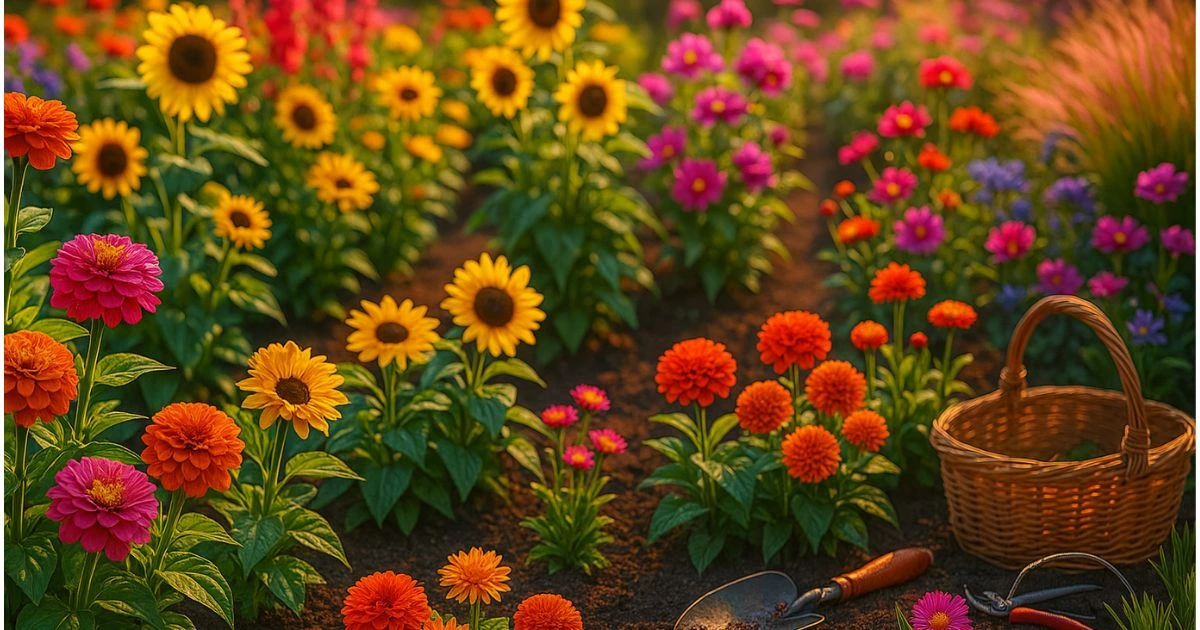
There’s a moment every gardener remembers — a quiet, early morning when you walk outside and see the first bloom you grew with your own hands. Maybe it’s a bright zinnia, a cheerful sunflower, or a delicate coneflower you planted weeks before. You pause, breathe, and feel a small shift inside you. It’s the beginning of something bigger: a new rhythm, a sense of purpose, and a connection to nature you didn’t know you needed.
That feeling is exactly why so many people fall in love with growing cut flowers. When you cut a stem you grew yourself and place it in a vase inside your home, it feels different — more personal, more meaningful. And the good news? You don’t need years of gardening experience to get there. With the right guidance, a few beginner-friendly flowers, and simple routines, you can create a cutting garden that blooms beautifully from your very first season.
This complete beginner’s guide gives you everything you need to get started. You’ll learn the easiest flowers to grow, how to prepare your soil, how to plant and water correctly, how to harvest stems that last longer in the vase, and how to avoid beginner mistakes. By the time you finish reading, you’ll have the confidence to build a cutting garden that feels vibrant, abundant, and uniquely yours.
Table of Contents
Understanding the Basics of Growing Cut Flowers
Beginner Gardening Basics, Cut Flower Overview, Flower Gardening Tips for Beginners
Before you choose your flowers or prepare your soil, it helps to understand what makes a flower ideal for cutting.
What Makes a Great Cut Flower?
- Long stems for bouquet building
- Fast repeat blooming
- Strong vase life
- Healthy growth in full sun
- Sturdy petals that don’t wilt instantly
Annuals vs Perennials for Cut Flowers
Annuals: Bloom quickly and heavily (perfect for beginners).
Perennials: Come back yearly, offering long-term stability.
Know Your Growing Zone
Your USDA zone determines which plants can survive your winters.
Check yours here:
👉 https://planthardiness.ars.usda.gov/
Understanding these basics gives you a foundation for successful growing cut flowers from your first season.
Best Beginner Flowers for a Cut Flower Garden
Easy Cut Flowers, Beginner-Friendly Blooms, Best Flowers for Cutting
Some flowers are simply easier for beginners. They grow fast, bloom often, and bounce back even if you make a few mistakes (which every beginner does).
Top Annuals for Growing Cut Flowers
These are classic, proven winners for beginners:
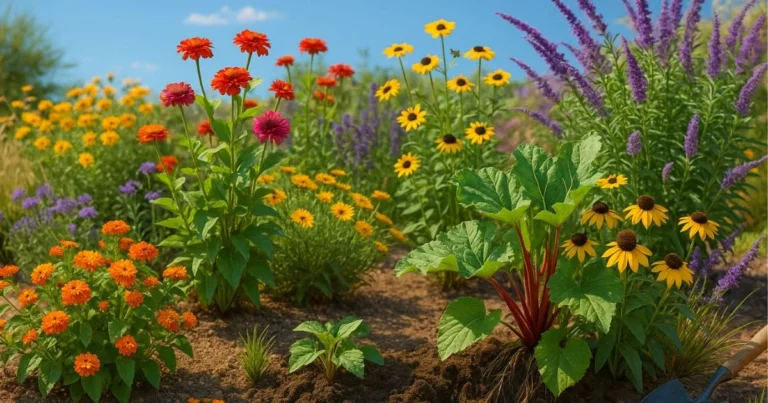
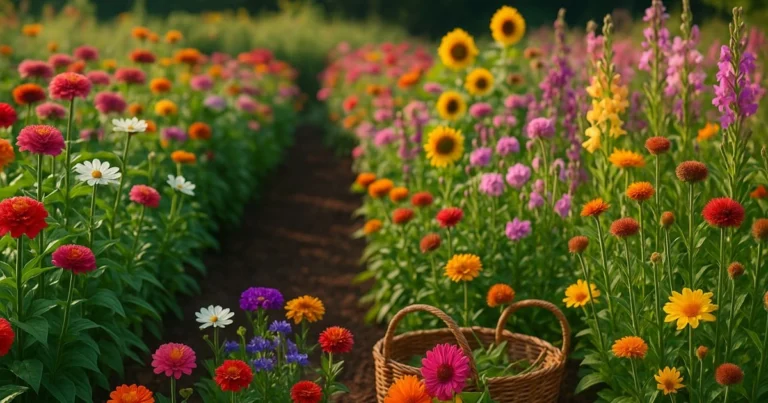
- Zinnias – Vibrant, long-lasting, and incredibly easy.
- Cosmos – Tall, airy, and perfect for fuller arrangements.
- Sunflowers – Cheery, bold, and fast-growing.
- Celosia – Unique textures with excellent vase life.
Why Annuals Are Perfect for New Gardeners
- Quick blooms
- Rich color variety
- High cutting productivity
- Forgiving when overwatered or underwatered
Best Perennials for Beginner Cut Flower Gardens
Perennials return year after year, saving money and effort.
- Coneflowers (Echinacea)
- Black-Eyed Susans
- Shasta Daisies
- Yarrow
- Coreopsis
These flowers add long-lasting structure and consistency to your cutting garden.
Filler Flowers & Foliage
A bouquet needs more than just focal blooms. You’ll want greenery and filler plants.
Best Beginner Fillers:
- Baby’s Breath
- Ammi majus
- Dusty Miller
- Sage
- Rosemary
These add shape, texture, and softness to your arrangements.
Light Requirements for Growing Cut Flowers
Sunlight Requirements, Full Sun Flowers, Beginner Light Tips
Most Cut Flowers Need Full Sun
At least 6–8 hours of direct sunlight every day.
If you give your flowers too little light:
- Stems become thin
- Blooms shrink
- Colors fade
- Flowering slows dramatically
How to Track Sunlight in Your Yard
- Watch your yard at 8am, noon, and 4pm
- Use your phone’s compass (south-facing = full sun)
- Note shade from trees, fences, and buildings
- Track sunlight for 2–3 days before planting
Learn more about light from UF/IFAS Gardening Solutions:
👉 https://gardeningsolutions.ifas.ufl.edu/
Preparing Your Soil for a Healthy Cut Flower Garden
Soil Preparation for Beginners, Garden Soil Improvement, Cut Flower Bed Prep
Healthy soil = healthy blooms. Poor soil = weak stems and fewer flowers.
Ideal Soil for Cut Flowers
- Loamy
- Nutrient-rich
- Well-draining
- pH 6.0–7.0
How to Improve Your Soil
Add the following before planting:
- Compost
- Aged manure
- Worm castings
- Organic matter
- Perlite (for drainage)
Soil Testing
Testing tells you exactly what’s missing.
Find a soil testing lab here:
👉 https://www.extension.org/
How to Plant Cut Flowers Correctly
Planting Cut Flowers, Beginner Planting Techniques, Garden Layout Basics
Planting correctly ensures fast rooting and healthy growth.
Step-by-Step Planting Guide
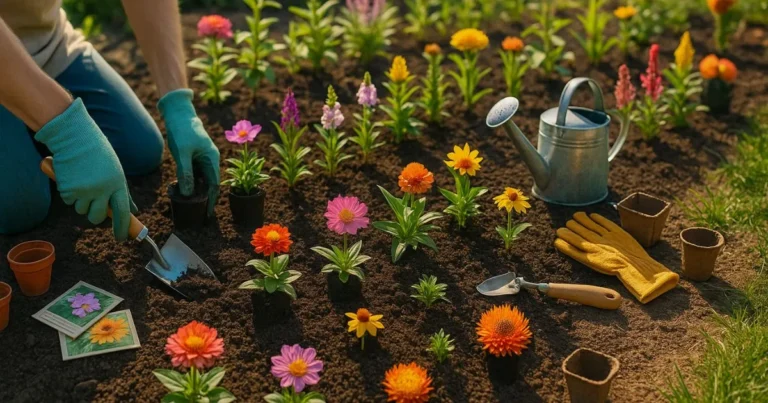
- Choose plants suited to your sunlight level.
- Loosen soil and mix in compost.
- Dig holes twice the width of the root ball.
- Plant at the same depth as the container.
- Water slowly and deeply.
- Add 2–3 inches of mulch.
Raised Bed Planting Setup
Raised beds are ideal for growing cut flowers because they offer good drainage and easy maintenance.
Benefits of Raised Beds
- Fewer weeds
- Faster soil warming
- Easy access
- Less compaction
- Clear structure for beginners
Suggested Soil Mix
- 40% compost
- 40% topsoil
- 20% coarse sand/perlite
Container Gardening for Growing Cut Flowers
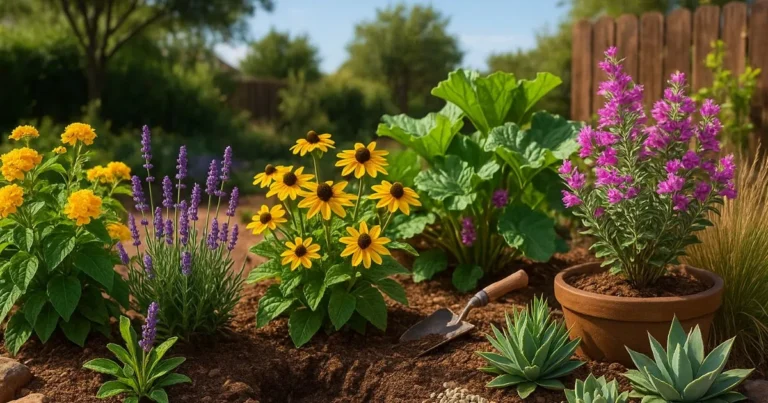
If you’re short on space, container gardening is excellent for beginners.
Best Container-Friendly Cut Flowers
- Dwarf Sunflowers
- Zinnias
- Snapdragons
- Dahlias
Container Tips
- Always use drainage holes
- Use quality potting mix
- Water more frequently than garden beds
- Avoid overcrowding
Watering Tips for Growing Cut Flowers
Watering Schedules, Hydration Needs, Flower Care for Beginners
Watering mistakes are the #1 beginner issue.
Smart Watering Practices
- Water early morning
- Deep, slow watering > shallow watering
- Avoid wetting leaves
- Check soil moisture 2″ deep
- Use mulch to retain moisture
Signs of Overwatering
- Yellow leaves
- Droopy plants with wet soil
- Rotting stems
- Mushy roots
Fertilizer Recipe for Beginner Cut Flower Gardens
DIY Flower Fertilizer, Natural Flower Food, Beginner Garden Nutrition
Below is a beginner-friendly fertilizer that improves bloom quality and stem strength.
DIY Fertilizer Recipe
| Ingredient | Amount | Purpose |
|---|---|---|
| Compost | 3 cups | Adds nutrients |
| Bone Meal | 1 cup | Encourages strong flowering |
| Epsom Salt | 1 tbsp | Improves color & bloom size |
| Fish Emulsion | 2 tbsp | Nitrogen for foliage growth |
| Slow-Release Fertilizer | ½ cup | Sustained feeding |
Instructions
- Mix ingredients evenly.
- Apply around the root zone monthly.
- Water deeply after applying.
- Avoid fertilizing during extreme heat.
Beginner-Friendly Pest Management
Natural Pest Control, Flower Garden Pests, Easy Bug Solutions
Pests can be frustrating, but simple steps keep them under control.
Common Pests
- Whiteflies
- Aphids
- Caterpillars
- Thrips
- Spider Mites
Natural Solutions
- Neem oil spray
- Insecticidal soap
- Row covers for seedlings
- Hand-removal
- Mulch to prevent weeds
More pest solutions:
👉 https://gardeningsolutions.ifas.ufl.edu/
Harvesting Tips for Growing Cut Flowers
How to Harvest Flowers, Beginner Cutting Techniques
Cutting flowers correctly increases vase life and encourages more blooms.
Best Harvesting Practices
- Harvest early morning
- Use sharp scissors
- Remove lower leaves before placing in water
- Cut stems at a 45° angle
- Immediately place stems in cool water
How Often to Harvest
Many flowers bloom more when harvested regularly — especially zinnias, cosmos, and coneflowers.
Simple Design Tips for Beginner Bouquets
Flower Arranging Basics, Beginner Bouquet Design
Once you harvest your flowers, arranging them becomes your creative outlet.
Bouquet Structure
- Focal Flowers – main stars
- Fillers – softness and support
- Greenery – shape and balance
Beginner Arrangement Tips
- Stick to 2–3 main colors
- Use odd numbers of stems for balance
- Combine textures for interest
- Don’t overcrowd the vase
Year-Round Maintenance for Cut Flower Gardens
Seasonal Care, Garden Upkeep, Continuous Bloom Tips
Weekly Tasks
- Deadhead spent blooms
- Check for pests
- Monitor soil moisture
Monthly Tasks
- Add compost
- Fertilize lightly
- Trim leggy stems
Seasonal Tasks
- Refresh mulch
- Replace annuals
- Remove dead foliage
Consistent care leads to abundant blooms and healthier plants.
Conclusion
Stepping into the world of growing cut flowers can be one of the most rewarding experiences you bring into your home and daily routine. With just a few beginner-friendly flowers, simple planting techniques, and regular care, you can create a beautiful garden full of stems ready to cut and enjoy. Every bloom becomes a reminder that growth takes patience, joy comes in small moments, and beauty is something you can create with your own hands. Your garden doesn’t have to be perfect — it only has to be yours.
FAQ: Growing Cut Flowers for Beginners
What are the easiest flowers for beginners?
Zinnias, sunflowers, cosmos, and coneflowers are excellent for beginners.
How much sun do cut flowers need?
Most cut flowers need 6–8 hours of direct sunlight.
Can you grow cut flowers in pots?
Absolutely — many cut flowers thrive in containers.
How often should you harvest flowers?
Often! Cutting promotes more blooms.
Do cut flowers need fertilizer?
Yes. Monthly feeding keeps flowers growing strong with long stems.