Pot Size for Pepper Plants: The Complete Guide to Growing Strong, Productive Container Peppers
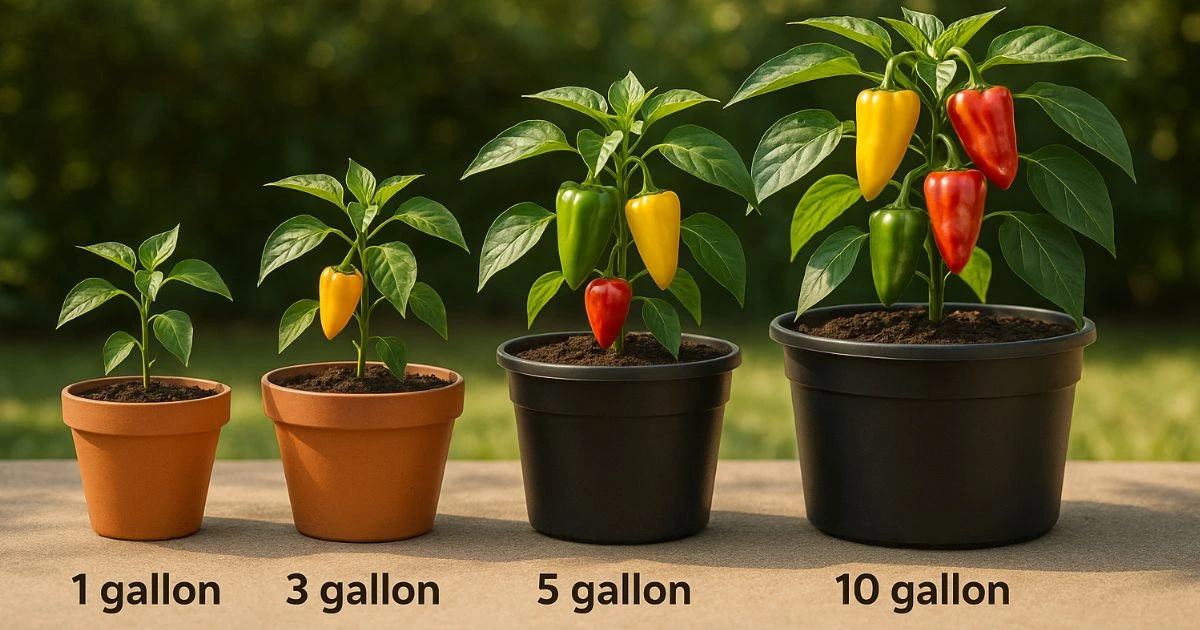
If you’ve ever planted peppers in a container only to watch them struggle for space, you’re not alone. Choosing the right pot size for pepper plants makes a difference that you can literally see and taste. A pepper placed in a properly sized pot becomes stronger, fuller, and far more productive. A pepper placed in a pot that’s too small will always be fighting against its container rather than growing with it.
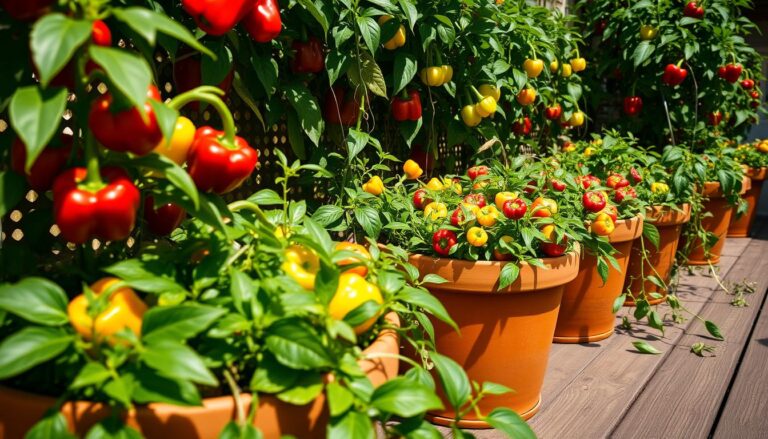
Container gardening peppers gives you the freedom to grow your own food even if you live in an apartment or have limited garden space. You can place containers on balconies, patios, porches, or even bright indoor areas. When you choose the best pot size for pepper plants, you give your peppers the foundation they need to thrive.
If this is your first time focusing on pot size for pepper plants, you’ll quickly discover how much healthier and more resilient your peppers become once their roots have proper room. This guide walks you through everything you need to know — from choosing containers to planting, caring, harvesting, troubleshooting, and even cooking with your homegrown peppers.
For general container gardening principles, you can explore the Royal Horticultural Society’s advice: https://www.rhs.org.uk
Table of Contents
Why Pot Size for Pepper Plants Is the Foundation of Successful Container Gardening
There’s a reason pot size for pepper plants comes up in every expert’s guide. Peppers rely heavily on deep, branching root systems. When their pot is too small, the roots circle the bottom instead of growing freely. When their pot is big enough, they flourish effortlessly.
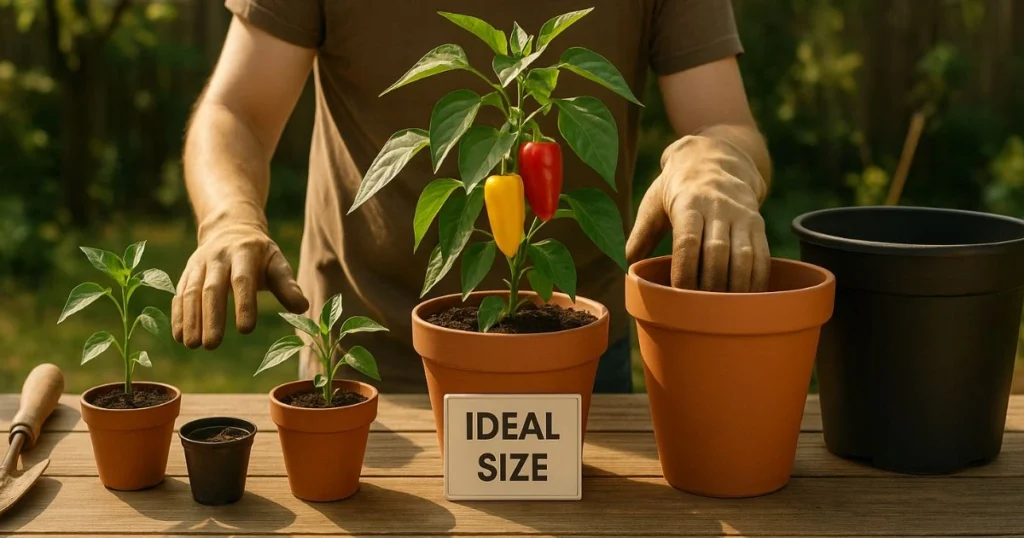
How Root Space Shapes Pepper Growth
When peppers have enough space:
- They develop stronger stems
- They produce more flowers and fruit
- They handle heat and wind better
- They absorb nutrients more efficiently
When peppers are planted in a container smaller than the ideal pot size for pepper plants, you will often notice:
- Drooping leaves
- Drying soil
- Small or few peppers
- Slower growth
The right container size removes these limitations and gives your plants a strong foundation.
Benefits of Choosing the Correct Pot Size
- Better nutrient uptake
- Superior moisture regulation
- Better resistance to stress
- Stronger root anchoring
- More consistent yields
Choosing the correct pot size for pepper plants is one of the easiest ways to improve your harvest without adding extra work.
Best Pot Sizes for Every Pepper Variety
Different peppers like different amounts of root space. Use this guide to match your variety with its ideal container.
Minimum Pot Sizes by Pepper Type
- Bell peppers — 5–7 gallons
- Jalapeños — 3–5 gallons
- Cayenne — 3 gallons
- Thai chili — 3 gallons
- Banana peppers — 4–5 gallons
- Poblano — 5 gallons
- Habanero — 5 gallons
- Mini peppers — 2–3 gallons
If unsure, go bigger. A larger pot size for pepper plants almost always results in a better harvest.
Depth and Width Guidelines
Peppers prefer deep pots. Aim for:
- Depth: 12–14 inches
- Width: 12–16 inches
Recommended Pot Size Table
| Pepper Variety | Ideal Pot Size | Minimum Depth | Notes |
|---|---|---|---|
| Bell peppers | 5–7 gallons | 12 inches | Larger pots = higher yield |
| Jalapeños | 3–5 gallons | 10–12 inches | Compact and reliable |
| Cayenne | 3 gallons | 10 inches | Great for small balconies |
| Banana peppers | 4–5 gallons | 12 inches | Requires consistent moisture |
| Habanero | 5 gallons | 12 inches | Prefers warm soil |
For variety-specific requirements, UCANR offers helpful pepper-growing guidelines: https://ucanr.edu
Best Containers for Pepper Plants
After choosing the correct pot size for pepper plants, the next step is choosing the container material.
Plastic Pots
Pros: Lightweight, inexpensive, retain moisture
Cons: May heat up quickly
Terracotta Pots
Pros: Breathable
Cons: Dry out fast
Fabric Grow Bags
Pros: Excellent drainage
Cons: Need more watering
Wooden Planters
Pros: Insulated, decorative
Cons: Heavy, may rot
Choose the container material that fits your climate and watering routine.
Soil, Fertilizer, and Watering for Container Peppers
Ideal Soil Mix
Peppers perform best in:
- 50% potting soil
- 25% compost
- 25% perlite or coco coir
Soil needs to drain well yet retain enough moisture for roots to thrive.
Fertilizer Routine
- Add slow-release fertilizer at planting
- Feed liquid nutrients every 2–3 weeks
- Add magnesium (Epsom salt) if leaves look pale
Watering Tips
Pot size for pepper plants affects how often you water.
Bigger pots = more stable moisture.
Smaller pots = frequent drying.
- Water when top inch is dry
- Water deeply
- Avoid watering leaves
For watering research and horticultural watering principles, see USDA resources: https://www.usda.gov
Planting and Caring for Peppers in Containers
How to Plant Using the Right Pot Size
- Fill the container with soil
- Add slow-release fertilizer
- Place the plant slightly deeper than before
- Water well
- Move pot into full sunlight
- Add mulch to retain moisture
Sunlight Requirements
Peppers need:
- 6–8 hours of direct sunlight
- Warmth above 70°F
Supporting Pepper Plants
- Use stakes or small cages
- Remove damaged leaves
- Prune only lightly
Pot size for pepper plants affects plant balance, so larger pots reduce tipping.
Common Problems When Growing Peppers in Pots
Pot Size–Related Issues
- Soil dries too fast
- Plants lean or topple
- Reduced yields
- Roots become tightly packed
Pest Problems
- Aphids
- Whiteflies
- Spider mites
Diseases
- Blossom end rot
- Powdery mildew
- Root rot
If you suspect disease, Cornell Extension provides excellent diagnostic tools:
https://gardening.cornell.edu
Harvesting and Using Your Homegrown Peppers
When to Harvest
Most peppers mature in 60–90 days.
Pick when firm and fully colored.
How to Store Your Harvest
- Refrigerate
- Freeze
- Dry
- Pickle
Recipe: Fresh Stuffed Peppers from Your Container Garden
Ingredients Table
| Ingredient | Amount |
|---|---|
| Bell peppers | 4 |
| Cooked rice | 1 cup |
| Protein of choice | 1 cup |
| Tomato sauce | 1/2 cup |
| Onion | 1 |
| Garlic | 2–3 cloves |
Instructions
- Cut tops and remove seeds
- Sauté fillings
- Mix rice with sauce
- Stuff peppers
- Bake at 375°F for 25–30 minutes
FAQs About Pot Size for Pepper Plants
What is the best pot size for pepper plants?
Most varieties need 3–5 gallons; bell peppers need 5–7 gallons.
Can peppers grow in small pots?
Mini varieties, yes. Most need deeper pots.
Why does the pot size matter so much?
It affects root growth, yield, and moisture.
How many pepper plants per pot?
Always one per pot.
Does pot depth matter?
Yes — peppers prefer deep pots to support strong roots.
Conclusion: Choose the Right Pot Size and Grow Better Peppers
When you select the right pot size for pepper plants, everything else becomes easier. Peppers thrive when their roots have room, and container gardening peppers becomes far more successful. Whether you grow bell peppers, jalapeños, or hot varieties, choosing the correct pot size will determine the strength of your harvest.
Start with the right pot today. Plant one pepper — watch it thrive — and enjoy the satisfaction of growing your own food.