21 Beautiful Florida Native Flowers for Tropical, Low-Maintenance Gardens (Complete Florida Flower Gardening Guide)
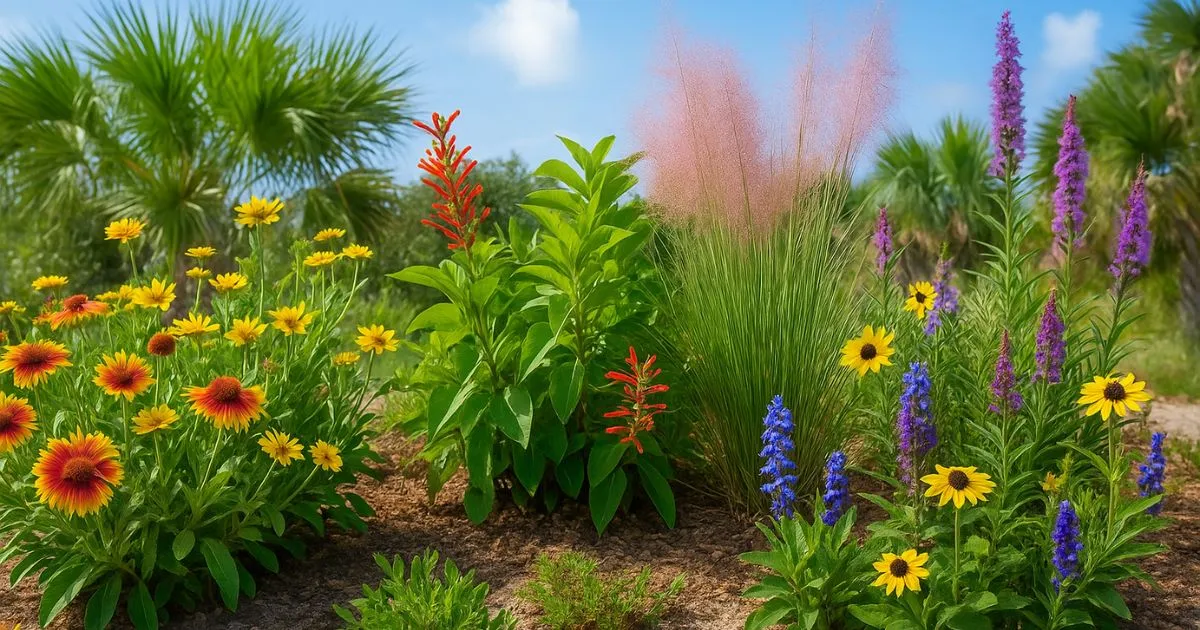
Florida native flowers have a way of changing how you see gardening in this state. When you first start planting here, you probably expect your flowers to respond the way they did in other places you’ve lived. You water them, give them sunlight, feed them well—and then the Florida weather steps in with heat that feels like it’s pressed right against your skin, humidity thick enough to soften the air, and sudden storms that seem to appear out of nowhere.
Maybe you’ve experienced that moment when you walk outside, ready to admire your garden, only to find leaves curling, petals drooping, and plants that look tired before summer even begins. You might wonder if gardening in Florida is just harder than it should be… or whether it’s even worth trying again.
But then something happens—you come across a plant that looks completely unfazed by the heat. It’s blooming boldly, breathing easily in humidity, and spreading out like it’s entirely comfortable. You find out it’s a native plant, one that belongs in this landscape, one that comes alive in Florida’s conditions instead of fighting them.
That’s the moment everything shifts.
You stop battling the climate and start gardening with it.
This guide will show you exactly how to do that by helping you choose the best Florida native flowers for year-round color, coastal conditions, shade gardens, pollinator habitats, and low-maintenance yards. When you choose what truly thrives here, your garden becomes easier, more vibrant, and far more rewarding.
Table of Contents
Understanding Florida’s Climate Before Choosing Flowers
Florida’s climate is more complex than most states. The difference between North Florida and the Keys is as dramatic as the difference between Georgia and Costa Rica—but all of it falls within your gardening map.
Florida’s Climate Zones (USDA Zones 8–11)
- North Florida: Light freezes, sandy soil, lower humidity
- Central Florida: Subtropical, hot, storm-prone, mild winters
- South Florida: Tropical, humid, salt-air influence
- Florida Keys: Coral-rock soil, full-sun intensity, constant salt exposure
Why the Climate Matters
You deal with:
- High humidity (ideal for pests and fungus)
- Tropical rainfall patterns
- Sandy soil lacking nutrients
- Salt spray along the coasts
- Intense sun exposure year-round
- Hurricanes and heavy storms
These conditions make Florida native flowers essential–they evolved here and are naturally adapted to every challenge.
Helpful resource:
UF IFAS Gardening Solutions
https://gardeningsolutions.ifas.ufl.edu/
Best Florida Native Flowers for Year-Round Color
Below you’ll find flowers that bloom brighter, grow easier, and withstand Florida’s toughest seasons.
Florida Native Perennial Flowers
1. Blanketflower (Gaillardia pulchella)
Thrives in heat, sun, humidity, and even salty soil.
2. Tropical Sage (Salvia coccinea)
One of the most butterfly-friendly natives.
3. Firebush (Hamelia patens)
Blooms nonstop and handles drought and storms easily.
4. Coral Honeysuckle
Perfect for hummingbirds and trellises.
5. Black-Eyed Susan (Rudbeckia hirta)
Classic yellow petals that thrive in sandy soil.
6. Swamp Sunflower
A tall, dramatic fall bloomer.
7. Blue Mistflower
Creates dreamy blue-purple clouds of blooms.
8. Muhly Grass
Airy purple plumes that look like floating smoke.
Florida Native Annual Flowers
9. Partridge Pea
A key plant for native bees.
10. Seaside Goldenrod
A bright yellow coastal favorite.
11. Drummond Phlox
Early-season blooms in a variety of shades.
12. Coreopsis (Florida’s State Wildflower)
Loved for long-lasting color and incredible durability.
Shade-Loving Florida Native Flowers
13. Wild Coffee
Cardinal red berries + white blooms.
14. Coontie (Zamia integrifolia)
Florida’s native cycad—ancient, resilient, shade tolerant.
15. Blue-Eyed Grass
Soft, delicate blooms that handle filtered shade.
16. Frogfruit
Natural groundcover and pollinator magnet.
Native plant source:
Florida Native Plant Society
https://www.fnps.org/
Full Sun vs. Shade: What Works Where?
Sunlight in Florida hits differently—stronger, hotter, longer. Choosing based on light conditions is essential.
Full Sun Florida Native Flowers
- Blanketflower
- Firebush
- Tropical sage
- Seaside goldenrod
- Dune sunflower
- Swamp sunflower
Shade or Part-Shade Florida Native Flowers
- Wild coffee
- Blue-eyed grass
- Coontie
- Frogfruit
Versatile Flowers for Both
- Swamp sunflower
- Dune sunflower
- Frogfruit
Best Florida Native Flowers by Region
Each region has unique soil and climate demands.
North Florida (Cooler Winters)
Great picks:
- Black-eyed Susan
- Phlox
- Blanketflower
- Blue sage
- Swamp sunflower
Central Florida (Subtropical, Stormy)
Great picks:
- Firebush
- Tropical sage
- Coreopsis
- Muhly grass
- Blanketflower
South Florida (Tropical, Humid)
Great picks:
- Beach sunflower
- Firebush
- Indigo spires
- Seaside goldenrod
- Pineland heliotrope
Florida Keys (Salt, Heat, Coral Soil)
Great picks:
- Railroad vine
- Dune sunflower
- Sea lavender
- Beach morning glory
Resource:
https://www.fnps.org/plants
Soil Preparation for Flower Gardening in Florida
Understanding Florida Soil
You’re usually working with:
Sandy Soil
- Fast draining
- Low nutrient content
- Heats up quickly
Coral Rock Soil (Keys)
- Alkaline
- Difficult for roots
- Nutrient-poor
Peat Soil (South Florida wetlands)
- Acidic
- High organic material
How to Improve Florida Soil
To help Florida native flowers thrive even faster:
- Add compost weekly or monthly
- Mix in peat moss or coco coir for moisture retention
- Use worm castings for slow-release nutrients
- Add pine bark fines to improve structure
- Mulch around all plants
Soil testing resource:
UF IFAS Soil Lab
https://soilslab.ifas.ufl.edu/
Watering, Mulching & Routine Care for Florida Gardens
Watering Tips
- Always water early in the morning
- Use drip irrigation for best absorption
- Water deeply, not frequently
- Reduce watering during rainy season
Mulching Tips
Mulch helps Florida soil:
- Retain moisture
- Prevent weeds
- Avoid erosion
- Moderate temperature
Best mulches:
- Pine bark
- Pine straw
- Melaleuca mulch (eco-friendly)
Best Containers & Placement for Flowers in Florida
Best Containers
You’ll want containers that resist heat, humidity, and algae:
- Glazed ceramic
- Plastic
- Self-watering containers
- Composite pots
Best Placement
- Morning sun + afternoon shade
- Keep pots off hot concrete
- Use pot feet for airflow
- Rotate pots seasonally
Pollinator-Friendly Florida Native Flowers
These native species offer food and habitat for local wildlife.
Pollinator All-Stars
- Firebush
- Blanketflower
- Milkweed
- Blue mistflower
- Tropical sage
- Partridge pea
Pollinator resource:
https://www.flawildflowers.org/
Common Mistakes in Florida Flower Gardening
Mistake #1: Planting non-native flowers
Fix: Choose Florida native flowers for minimal maintenance.
Mistake #2: Overwatering in sandy soil
Fix: Deep water and mulch.
Mistake #3: Ignoring salt exposure
Fix: Choose salt-tolerant natives near coastlines.
Mistake #4: Planting for the wrong light
Fix: Understand sun vs. shade varieties.
Mistake #5: Forgetting to amend soil
Fix: Add compost frequently.
Florida Garden Recipe: Tropical Citrus & Edible Flower Salad
Ingredients Table
| Ingredient | Amount | Notes |
|---|---|---|
| Edible hibiscus petals | ½ cup | Mild citrus tang |
| Nasturtium petals | 1 cup | Peppery bite |
| Mixed greens | 4 cups | Base |
| Florida oranges | 1 cup | Sweet & juicy |
| Key lime juice | 2 tbsp | Bright acidity |
| Honey | 1 tbsp | Floral flavor |
| Olive oil | 2 tbsp | Smooth dressing |
Instructions
- Rinse greens and petals gently.
- Slice oranges and add to bowl.
- Whisk dressing ingredients until smooth.
- Toss, chill, and serve.
FAQ About Florida Native Flowers
What are the easiest Florida native flowers for beginners?
Blanketflower, tropical sage, firebush, and dune sunflower.
Do Florida native flowers require less water?
Yes—many evolved in sandy, drought-prone soil.
Which Florida native flowers attract butterflies?
Milkweed, blue mistflower, partridge pea, and blanketflower.
Are Florida native flowers good for shade?
Yes—wild coffee, coontie, and frogfruit thrive in shade.
What blooms year-round in Florida?
Firebush, blanketflower, and dune sunflower bloom nearly all year.
Conclusion — A Garden That Belongs in Florida
Once you choose Florida native flowers, your garden stops fighting the climate. Instead, it begins to grow with it. These plants are built for humidity, storms, sandy soil, blazing sun, and everything else Florida brings. They’re beautiful, resilient, and naturally suited to your landscape.
When you fill your yard with native flowers, you’re not just creating a garden—you’re restoring a piece of Florida’s natural beauty.