12 Herbs in a Pot: The Ultimate Guide to Garden Herb Planters for Any Home
There’s a certain comfort in having something living close to where you cook or spend your quiet moments. Maybe you’ve brushed against a basil leaf and felt the scent rise instantly, nudging you toward a memory. Or maybe you’ve walked by a grocery-store herb display and wished you could grow your own—fresh, fragrant, and ready whenever you want it.
Growing herbs in a pot brings that sense of calm and possibility right into your home. You don’t need a backyard. You don’t need years of gardening experience. You don’t even need perfect sunlight. All you truly need is a pot, a handful of soil, and the willingness to begin.
What makes herb planters so appealing is the combination of simplicity and reward. You grow something useful. Something you can smell, taste, and enjoy. Something you can pick fresh moments before you use it. And the best part? Most herbs are naturally forgiving. They want to grow. They adapt quickly. They ask for far less than you might imagine.
This guide will walk you through the best garden herb planters, the easiest herbs to grow, soil mixes, container choices, planting methods, maintenance tips, and everything you need to feel confident starting your own herb garden—even if you’ve never grown anything before.
Table of Contents
Why Growing Herbs in a Pot Is Perfect for Any Skill Level
Benefits of Container Herb Gardening
Growing herbs in pots gives you control, flexibility, and convenience that traditional beds can’t always offer. When you grow herbs in a pot, you benefit from:
- No need for a yard — perfect for balconies, kitchens, windowsills, and patios.
- Easier pest control — fewer soil-borne diseases and far fewer weeds.
- Better sunlight management — simply move the pot to catch more light.
- Seasonal flexibility — you can bring herbs indoors during colder months.
- Cleaner harvesting — no bending over or digging in the dirt.
- Beginner-friendly care — herbs in containers are easier to water and monitor.
- Year-round availability — grow indoors with a grow light and enjoy nonstop herbs.
Growing herbs this way is about making gardening accessible, enjoyable, and adaptable to your daily life.
Common Beginner Mistakes (and How to Avoid Them)
Even the easiest herbs can struggle if set up incorrectly. Here are the mistakes you want to avoid:
MISTAKE 1: Using Pots Without Drainage
Waterlogged roots rot quickly.
✔ Always choose pots with drainage holes.
MISTAKE 2: Overwatering
Most herbs prefer slightly dry soil.
✔ Water only when the top inch feels dry.
MISTAKE 3: Planting Incompatible Herbs Together
Each herb has different needs.
✔ Group herbs according to sunlight and moisture preferences.
MISTAKE 4: Using Soil That Stays Wet
Herbs prefer loose, airy mixes.
✔ Use potting soil, not garden soil.
For a deeper look into herb growth requirements, you can explore the Royal Horticultural Society herb guide:
👉 https://www.rhs.org.uk/herbs
The 12 Best Herbs in a Pot for Any Home
Each of these herbs is beginner-friendly, flavorful, and adaptable to small containers.
1. Basil – Fragrant, Fast, and Perfect for Kitchens
Basil grows quickly and offers that unmistakable scent you probably associate with Italian cooking.
Why It’s Easy
- Loves sunlight
- Grows fast
- Responds well to frequent harvesting
Best Use: pasta, salads, sauces
2. Mint – Hardy and Fresh with Minimal Work
Mint grows vigorously and thrives even when neglected.
Why It’s Easy
- Grows in partial shade
- Handles irregular watering
- Spreads fast
Important: Always grow mint alone—it overtakes other herbs.
3. Rosemary – Drought-Tolerant and Aromatic
If you forget to water sometimes, rosemary is your perfect match.
Why It’s Easy
- Loves bright sun
- Thrives on minimal watering
- Long-lived
Pairs beautifully with roasted dishes.
4. Thyme – Small Leaves, Big Flavor
Thyme offers compact, aromatic growth and suits even small containers.
Why It’s Easy
- Drought tolerant
- Perfect in full sun
- Needs minimal fertilizer
Great for meats, soups, and vegetables.
5. Parsley – Versatile and Gentle
Parsley grows beautifully in partial shade and stays lush with consistent watering.
Why It’s Easy
- Adapts to indirect light
- Grows quickly from seed
- Regrows after cutting
Excellent for garnishes and sauces.
6. Cilantro – Bright, Cool-Loving Flavor
Cilantro grows fast and loves cooler climates.
Why It’s Easy
- Germinates quickly
- Prefers cooler temps
- Ideal for frequent harvesting
Perfect for tacos, salsas, and Asian dishes.
7. Chives – Hardy, Pretty, and Perennial
Chives grow back year after year with little work from you.
Why They’re Easy
- Cold tolerant
- Thrive in many light conditions
- Cut-and-come-again harvesting
Add their mild onion flavor to eggs, soups, and potatoes.
8. Oregano – Bold Mediterranean Flavor
Oregano is one of the toughest herbs for hot climates.
Why It’s Easy
- Drought tolerant
- Loves heat
- Thrives in terracotta pots
Essential for Italian and Greek dishes.
9. Sage – Soft Leaves and Strong Aroma
Sage grows well in larger pots and adds a beautiful, silvery texture.
Why It’s Easy
- Handles neglect
- Loves sun
- Low water needs
Delicious with roasted meats.
10. Dill – Tall, Airy, and Fast-Growing
Dill grows tall and spreads flavor wherever it goes.
Why It’s Easy
- Germinates quickly
- Attracts pollinators
- Grows well in deep containers
Great for pickling.
11. Lemon Balm – Citrus-Scented and Hardy
This soothing herb is ideal for teas and desserts.
Why It’s Easy
- Thrives in partial shade
- Handles missing waterings
- Grows with little maintenance
Be aware: it spreads fast.
12. Tarragon – Elegant and Underappreciated
Tarragon is more delicate but surprisingly easy in pots.
Why It’s Easy
- Loves sun
- Handles dry spells
- Perfect for French dishes
A sophisticated herb for seasoned cooks.
Choosing the Right Garden Herb Planters
Types of Pots That Work Best for Herbs
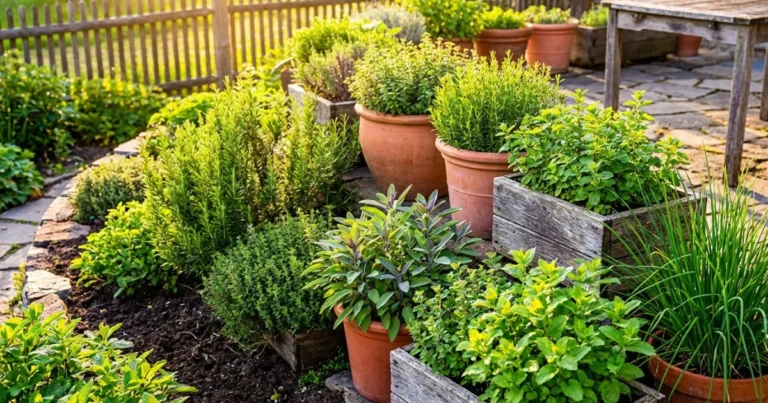
Different containers influence how well your herb garden thrives. Consider these:
- Terracotta pots — breathable; prevents root rot
- Ceramic planters — decorative but heavier
- Plastic pots — lightweight and affordable
- Wooden planters — rustic and excellent for clusters
- Hanging baskets — great for trailing herbs
- Vertical herb towers — ideal for tiny spaces
What to Look for in a Good Herb Planter
- drainage holes
- proper pot depth (6–14 inches)
- UV-resistant material if outdoors
- mobility so you can move herbs for sunlight
- neutral colors that don’t overheat in sunlight
Long-rooted herbs like rosemary or dill prefer deeper pots; smaller herbs like thyme or parsley need only shallow containers.
Best Soil Mix for Herbs in a Pot (With Table)
The Ideal Soil Blend for Healthy Herb Growth
| Ingredient | Amount | Purpose |
|---|---|---|
| Potting Soil | 50% | Base structure & nutrients |
| Perlite | 20% | Drainage & airflow |
| Compost | 20% | Organic nutrition |
| Sand | 10% | Prevents sogginess |
How to Use This Soil Mix
- Blend ingredients thoroughly.
- Lightly moisten the mixture.
- Fill your pot about three-quarters full.
- Add your herb plant.
- Backfill and press gently.
- Water to settle the soil.
This mix keeps herbs in a pot healthy by ensuring roots never sit in water.
How to Plant Herbs in a Pot the Correct Way
Step-by-Step Planting Instructions
1. Pick the Right Pot
- 6–10 inches: basil, parsley, herbs with smaller roots
- 10–14 inches: rosemary, lemon balm, sage
2. Add a Drainage Layer
Use pebbles or broken pottery to prevent soaked roots.
3. Add Soil Mix
Fill the pot loosely so roots can breathe.
4. Add the Herb
Place it at the same depth it grew in its nursery pot.
5. Water Lightly
Water until the soil feels evenly moist—not soggy.
6. Place the Herb in Bright Light
Most herbs need 4–6 hours of sun or a grow light.
Grow light reference:
👉 https://www.gardeners.com
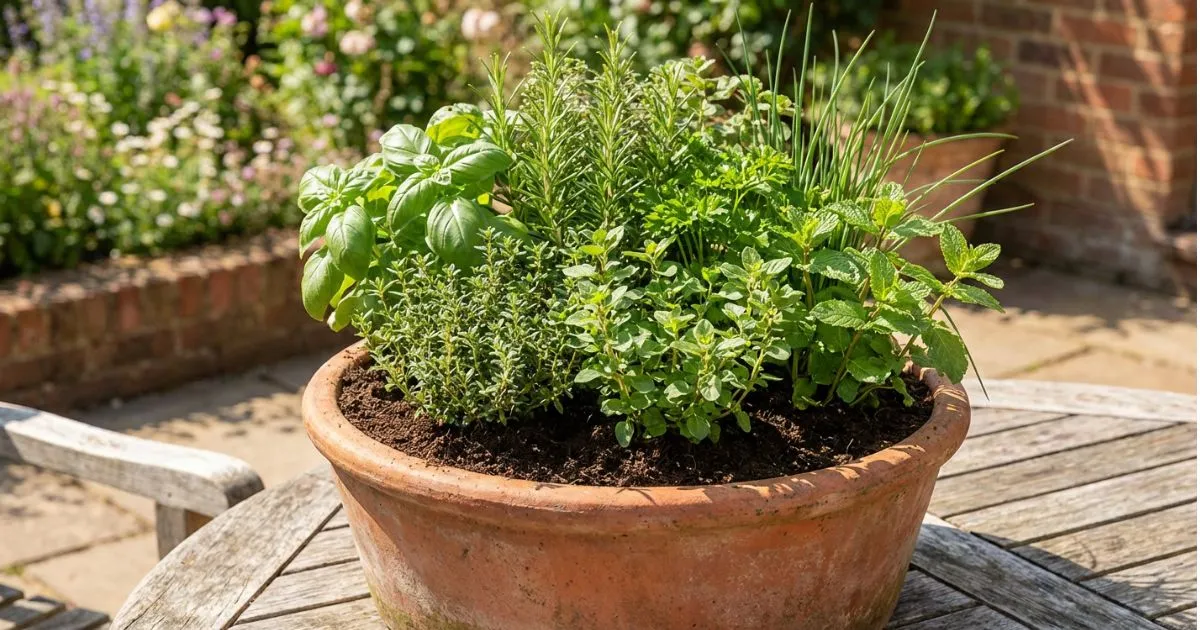
Combining Herbs in a Single Pot
Herbs That Grow Well Together
Mediterranean Group (Dry-soil herbs)
- rosemary
- thyme
- sage
- oregano
Moisture-Loving Group
- parsley
- cilantro
- chives
Compatible Pairing
- basil + oregano
Herbs That Should NOT Be Planted Together
- Mint — spreads aggressively
- Dill + Fennel — cross-pollinate
- Cilantro + Dry-soil herbs — conflicting needs
Watering, Sunlight, and Pruning Tips for Healthy Herbs
Watering Tips
- Water when the top inch of soil dries
- Avoid wetting leaves when possible
- Empty saucers to prevent rot
Pruning Tips
- Pinch basil tops weekly
- Remove dead or yellowing leaves
- Harvest herbs regularly to stimulate new growth
Sunlight Tips
- Most herbs need 4–6 hours of sunlight
- Rotate pots weekly for even growth
- Use supplemental grow lights indoors
Common Problems & Solutions for Garden Herb Planters
Overwatering
Symptoms: yellow leaves, drooping
Fix: increase drainage
Leggy Growth
Cause: insufficient sunlight
Fix: move to brighter spot
Wilting
Cause: heat stress or underwatering
Fix: water deeply and shade temporarily
Pests
Fix: neem oil, soapy water spray, improved airflow
Quick Recipes Using Fresh Herbs (With Table)
Simple Dishes You Can Make with Your Herb Harvest
| Recipe | Herbs Used | Notes |
|---|---|---|
| Lemon Basil Pasta | Basil | Best with fresh leaves |
| Rosemary Roasted Potatoes | Rosemary | Complement with garlic |
| Mint Iced Tea | Mint | Use cold brewing |
| Garlic Herb Butter | Parsley, Dill | Spread on warm bread |
| Herb Omelette | Chives | Adds mild onion flavor |
FAQ About Growing Herbs in a Pot
What herbs grow best in a pot?
Basil, rosemary, parsley, chives, mint, thyme, and oregano.
How often should I water herbs in a pot?
Water when the soil feels dry about an inch down.
Can I grow herbs indoors year-round?
Yes—most herbs in a pot thrive indoors with enough sunlight or grow lights.
Why do my potted herbs keep dying?
Usually from overwatering, poor drainage, or low light.
Can I mix different herbs in one pot?
Only if they share similar water and light needs.
Conclusion
Growing herbs in a pot is one of the simplest ways to bring freshness, flavor, and fragrance into your daily life. You don’t need a garden. You don’t need tools. You don’t even need much time. Just a pot, some soil, and a willingness to begin.
Once you start, you’ll discover the joy of stepping outside—or into your kitchen—and plucking fresh herbs for your meals. You’ll feel more connected to what you cook, what you eat, and the process of growing something with your own hands.
You can begin with one herb or plant a full collection. Either way, you’re creating something real and rewarding—something that grows right along with you.