Can You Grow Corn in a Container? Yes—Here’s How
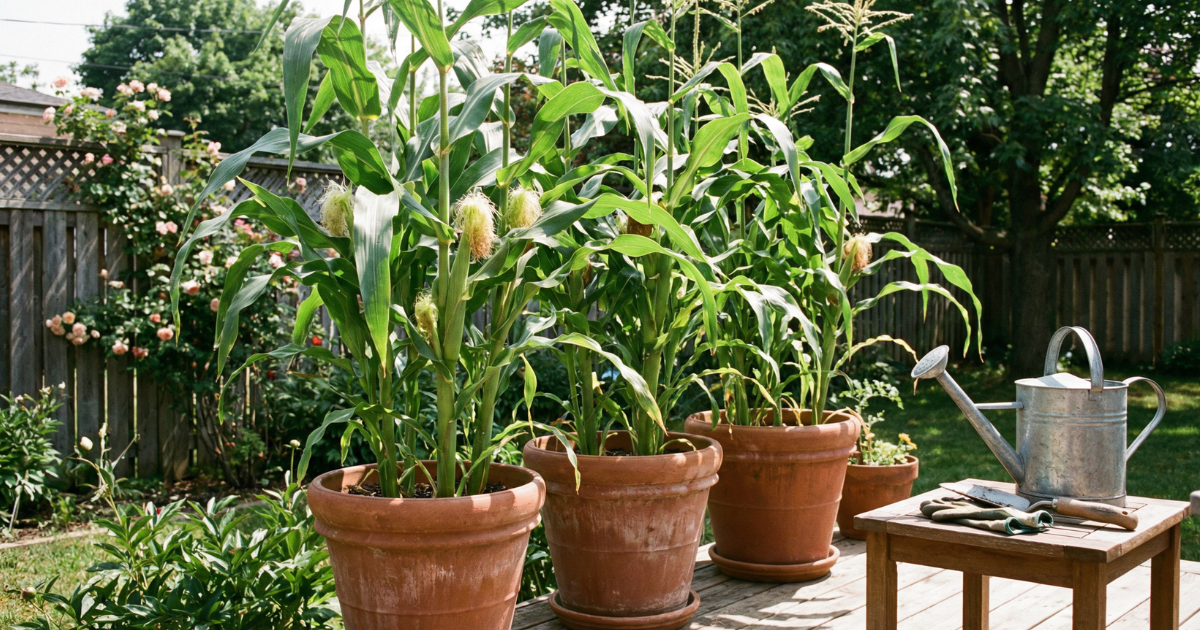
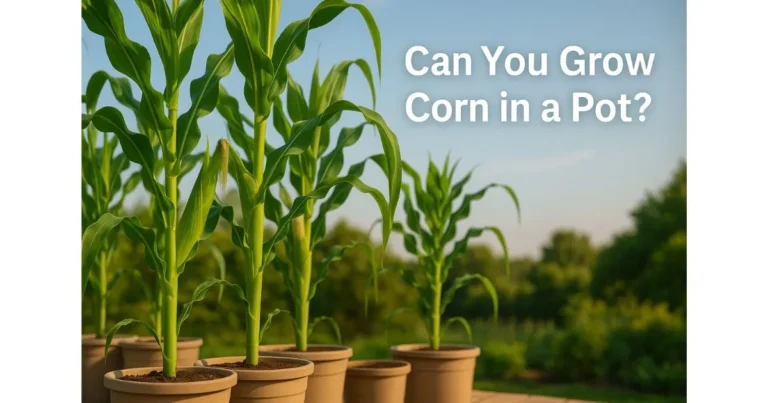
If you’ve ever wondered can you grow corn in a container, you’re not alone. Many gardeners assume corn needs an entire field to thrive, but the truth is that corn can grow surprisingly well in buckets, pots, and raised containers when you understand the basics. With the right setup, you can enjoy fresh, sweet corn from your patio, balcony, or backyard—even if you’re working with limited space.
Growing corn in a container takes a little planning, but the reward is worth it. You get better control over soil quality, moisture, pests, and drainage, which are all essential for healthy corn development. Corn may have a reputation for being a space-hungry crop, yet when grown intentionally, it adapts beautifully to container gardening.
To help you get started, this guide walks you through everything you need to know about container corn—from choosing the right container to pollination, watering, fertilizing, and harvesting.
(External ref: general container gardening basics at University Extension — https://extension.umn.edu)
Table of Contents
Why Growing Corn in Containers Works Well
If you’ve been unsure whether can you grow corn in a container, it helps to understand why the method works. Containers let you fine-tune the growing environment much better than traditional soil.
Benefits of Container Corn
- Better soil control: You get to choose the soil quality instead of relying on unpredictable ground soil.
- Perfect for small spaces: Corn can fit on patios, decks, or sunny balconies when placed in large buckets.
- Improved drainage: Containers naturally drain well, reducing problems like root rot.
- Cleaner, more manageable garden: No tilling or weeding required, which makes the whole experience simpler.
Research from the University of California Master Gardeners supports the idea that container gardening gives you more control over moisture, nutrients, and pests—three key elements for successful corn growth. (External ref: https://cmg.extension.colostate.edu/gardening-articles/)
Challenges to Expect
Even though can you grow corn in a container is a clear yes, you still need to be aware of a few challenges:
- Pollination: Corn relies heavily on wind, so you’ll often need to hand-pollinate.
- Nutrient demand: Corn is a heavy feeder, so fertilization must be consistent.
- Moisture control: Containers dry out faster than in-ground gardens.
With careful attention, each challenge is completely manageable.
Choosing the Right Container for Corn
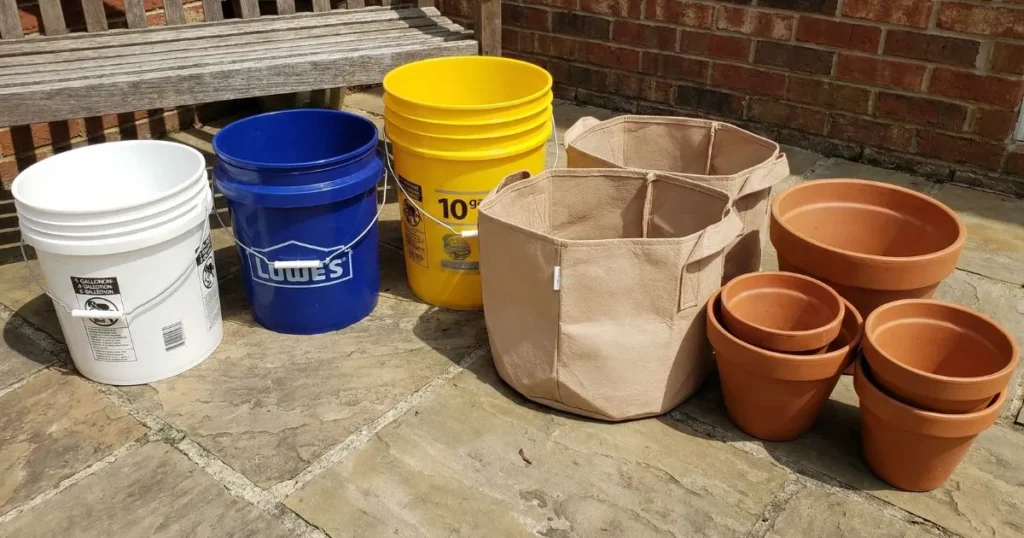
The first step toward answering can you grow corn in a container is choosing the right container. Corn grows tall and has a large root system, so container size truly matters.
Ideal Container Size
- Minimum: 5 gallons, but 10–15 gallons is ideal
- Depth: At least 12–18 inches
- Width: Enough for 2–3 stalks max
Container Material Options
- Plastic: Retains moisture well
- Clay: Breathable, helps regulate temperature
- Fabric grow bags: Excellent drainage
Choose based on your climate. Hot, dry climates do better with plastic; humid or wet climates may prefer clay or fabric.
Drainage is Essential
Make sure the container has several drainage holes. If not, drill extra holes. Corn roots rot quickly in soggy soil.
Best Corn Varieties for Container Growing
Not all corn varieties are suited for containers. Look for compact or dwarf types.
Top Compact Varieties
- Early Sunglow – early-maturing yellow corn
- Sugar Buns – dwarf sweet corn with tender kernels
- Golden Bantam – classic flavor and shorter stalks
- Glass Gem – colorful, ornamental, surprisingly container-friendly
If you truly want success when asking can you grow corn in a container, variety selection is one of the biggest factors.
Soil & Fertilizer Needs
Container corn needs nutrient-rich soil and regular fertilization.
Ideal Soil Mix
- Potting soil
- Compost
- Perlite or vermiculite
- pH between 6.0 and 7.0
This mix ensures proper aeration and nutrient availability.
Fertilization Routine
Corn is a heavy feeder. Use:
- Slow-release fertilizer when planting
- High-nitrogen fertilizer every 2–3 weeks
- A phosphorus boost mid-season for ear development
Monitor the plant’s color—pale leaves often mean nitrogen deficiency.
Planting Corn in a Container: Proper Technique
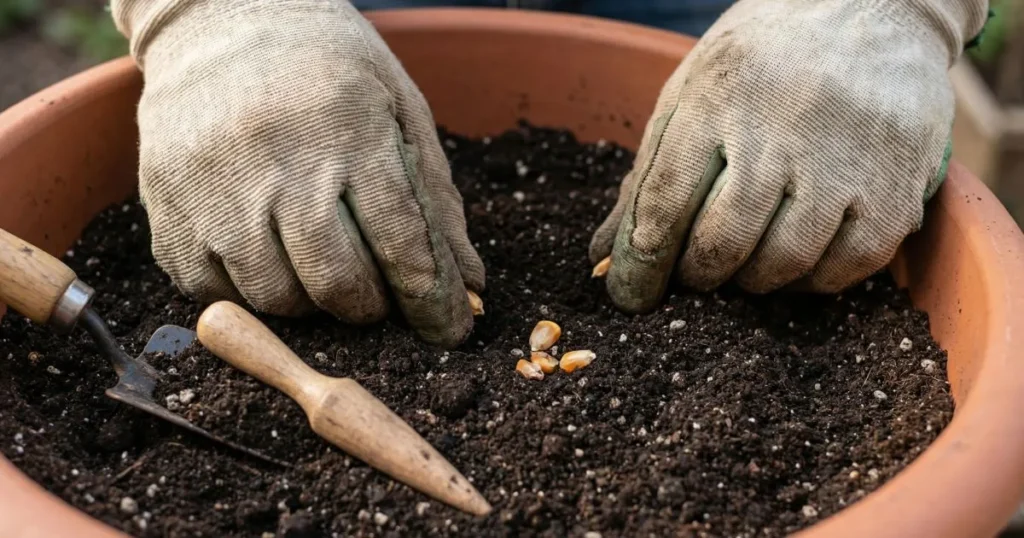
Knowing can you grow corn in a container also means understanding how to plant it correctly.
Spacing & Planting Depth
- Plant seeds 1 inch deep
- Space 6–8 inches apart
- Thin seedlings to 2–3 strong plants per container
When to Plant
Corn loves warmth. Plant when soil temperatures reach 60°F (15°C) or higher—usually late spring to early summer.
Succession Planting
To enjoy continuous harvests, plant a new set every 1–2 weeks throughout the season.
Watering Strategies for Healthy Corn
Corn in containers dries out faster than ground-grown corn, so watering is crucial.
Moisture Requirements
Keep the soil consistently moist, especially during ear formation.
Watering Schedule
- Check soil daily
- Water when top 1–2 inches feel dry
- Water deeply until drainage holes release water
Stress Signs
| Condition | Symptoms | Fix |
|---|---|---|
| Drought | Dry leaves, wilting | Water more frequently |
| Overwatering | Yellowing, soft stems | Improve drainage |
Light & Temperature Requirements
Corn loves sun. For anyone asking can you grow corn in a container, sunlight is non-negotiable.
Sunlight
- Minimum 6 hours of direct sun
- Preferably 8+ hours
Temperature
- Optimal: 65°F–85°F (18°C–30°C)
- Below 55°F = slow growth
- Above 90°F = heat stress
Move containers as needed to protect from extreme heat or cold.
Supporting & Protecting Your Container Corn
Supporting Tall Plants
Use stakes, tomato cages, or a small trellis. Corn becomes top-heavy as it matures.
Wind Protection
Containers can topple. Place them near a wall or use windbreaks.
Pest & Disease Management
Check plants weekly for:
- Aphids
- Corn borers
- Fungal diseases
Use organic methods like neem oil or insecticidal soap whenever possible.
(External guidance: https://www.gardeningknowhow.com/plant-problems/pests)
Pollination Techniques for Container Corn
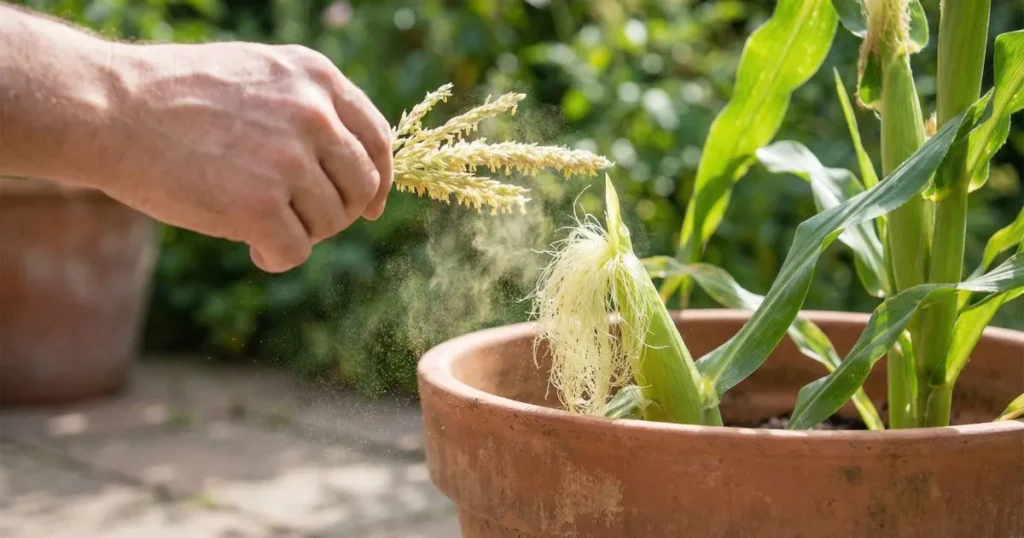
Pollination is one of the most important skills when learning can you grow corn in a container.
How Corn Pollinates
Pollen from the tassel must land on the silks to form kernels. Containers don’t get enough natural wind pollination.
How to Hand-Pollinate
- Shake the tassel gently over the silks
- Or use a small clean brush to transfer pollen
- Repeat for several days to ensure full pollination
Troubleshooting
- Sparse kernels → insufficient pollination
- Weak silks → nutrient deficiency or heat stress
Harvesting Container-Grown Corn
All your hard work pays off when harvest time arrives.
How to Tell Corn Is Ready
- Silks turn brown and dry
- Kernels release milky juice when punctured
Harvesting Technique
Hold the ear firmly, twist downward, and pull. Harvest in the morning for the best flavor.
Storage Tips
- Eat as soon as possible for maximum sweetness
- Refrigerate to slow sugar breakdown
Conclusion
So… can you grow corn in a container?
Yes — absolutely. With the right container size, healthy soil mix, consistent feeding, proper watering, and a bit of help with pollination, container corn can thrive in even the smallest outdoor spaces.
Growing corn this way gives you control, flexibility, and the joy of harvesting food right outside your home. Whether you’re gardening on a balcony, patio, or compact yard, container corn is a rewarding project you can enjoy season after season.
Try it once, and you’ll never ask can you grow corn in a container again—you’ll already know the answer.
FAQ
Can you grow corn in a container?
Yes, you can grow corn in a container if you choose a large enough pot (5–15 gallons) and provide proper sunlight, water, and fertilization.
What variety of corn grows best in containers?
Compact sweet corn varieties like Early Sunglow, Sugar Buns, and Golden Bantam perform best.
Do you need to hand-pollinate corn in a container?
Often, yes. Container corn doesn’t get much wind, so hand-pollinating improves kernel development.
How often should I water container corn?
Water when the top inch of soil feels dry, typically every 1–3 days depending on heat.
Can container corn grow in partial shade?
No. Corn requires full sun—at least 6 hours daily.
Can you grow corn in a container year-round?
Only in warm climates. In colder regions, corn must be grown during warm months.