Growing Corn in Raised Beds — Your Complete Guide to Thriving Corn in Small-Space Gardens
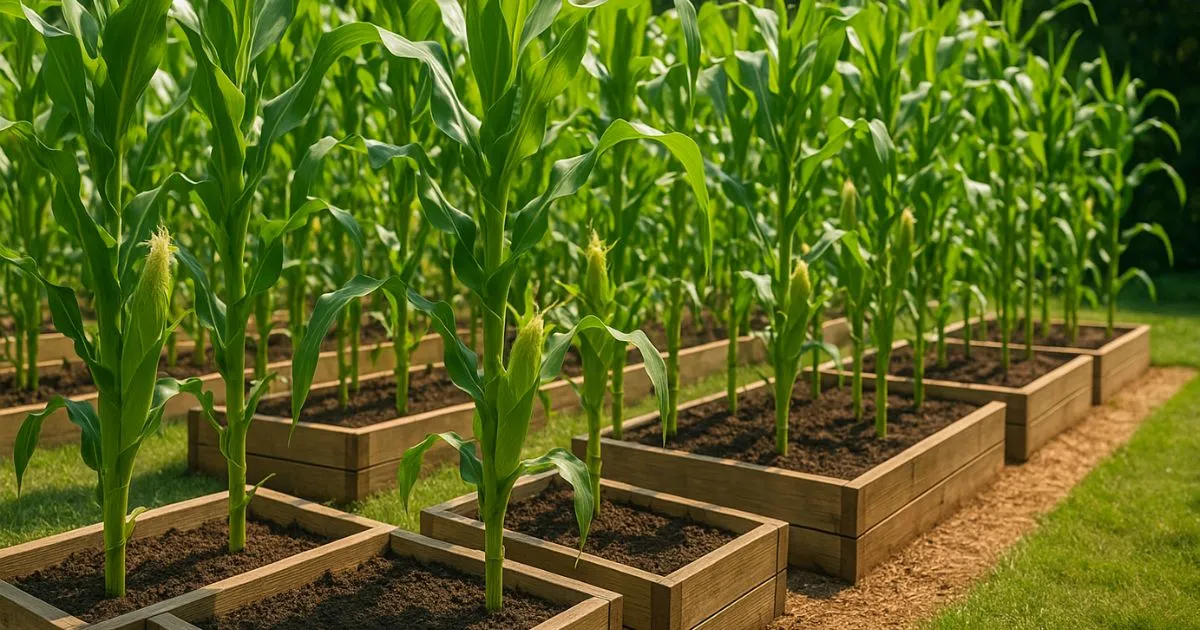
Growing corn in raised beds gives you the chance to enjoy fresh, sweet corn even if you don’t have a traditional garden. There’s something nostalgic about the sound of rustling stalks or the excitement of peeling back husks to reveal rows of golden kernels. Even if you live in a small home or an urban apartment, raised beds let you recreate that experience with surprising success.
Corn often intimidates gardeners because it’s associated with big fields and spacious gardens. But raised beds make this crop easier, more manageable, and more rewarding than most people expect. With the right setup, your raised bed can become a productive mini corn patch.
Table of Contents
Growing Corn in Raised Beds: Why This Method Works Better Than Expected
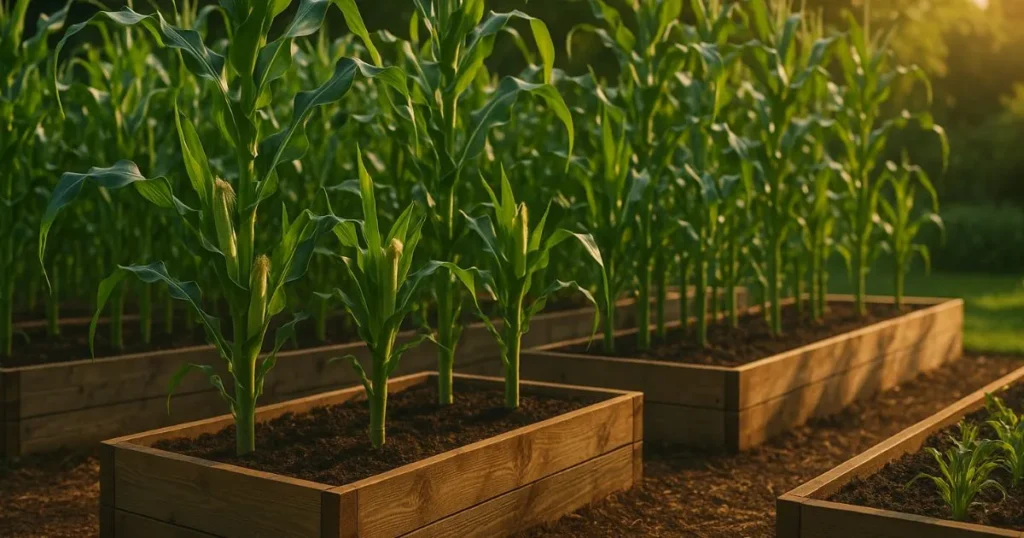
Raised beds offer several advantages that directly benefit corn.
Benefits of Raised Beds for Corn Growth
- Better soil warmth
- Improved drainage
- Reduced weed pressure
- Protection from soil-borne pests
- Easier access for care and harvesting
- Customizable soil quality
If you want to understand more about soil structure and drainage, the University of Missouri Extension provides useful information:
https://extension.missouri.edu
Raised Beds vs. Containers vs. In-Ground Corn
Raised beds offer the structure and depth corn prefers while giving you excellent control over:
- Watering
- Soil quality
- Fertility
- Pollination layout
For broader crop-growing comparisons, the USDA gardening page is helpful:
https://www.usda.gov/topics/gardening
Best Corn Varieties for Growing Corn in Raised Beds
Top Sweet Corn Choices
- Early Sunglow
- Sugar Buns
- Honey Select
- Peaches & Cream
These varieties are dependable, sweet, and adaptable.
Compact Options for Smaller Beds
- Dwarf sweet corn
- Short-season hybrids
- Mini popcorn varieties
For variety-specific growing data, see Cornell University’s growing guide:
https://cals.cornell.edu
Corn Variety Comparison Table
| Variety | Height | Days to Harvest | Best Bed Depth | Notes |
|---|---|---|---|---|
| Early Sunglow | 4–5 ft | 60 days | 10–12 in | Great for beginners |
| Honey Select | 6 ft | 80 days | 12–14 in | Very sweet |
| Peaches & Cream | 5–6 ft | 75 days | 12–14 in | Bicolor kernels |
| Dwarf Sweet Corn | 3–5 ft | 60–70 days | 10 in | Perfect for small spaces |
Preparing Your Raised Beds for Corn
Ideal Bed Size
- Minimum: 3 ft x 3 ft
- Ideal: 4 ft x 6 ft
- Depth: 10–14 in
Soil Mix for Corn
Corn performs best in fertile, loose, well-draining soil. A strong mix includes:
- 40% topsoil
- 40% compost
- 20% perlite or coarse sand
Corn growth and soil needs are explained in-depth by Penn State Extension:
https://extension.psu.edu
Fertilizing Before Planting
Add:
- Compost
- A nitrogen-rich amendment
- A balanced organic fertilizer
Corn is a heavy feeder, especially early on.
How to Plant Corn in Raised Beds Effective Step-by-Step
Planting Steps
- Fill the bed with soil mix
- Add fertilizer
- Create shallow trenches
- Sow seeds 1 inch deep
- Space seeds 8–12 inches apart
- Water deeply
- Plant in block patterns
- Mulch lightly
Why Block Planting Matters
Corn is pollinated by wind. Planting in blocks increases the number of kernels that develop.
For pollination details, UC ANR explains the process clearly:
https://ucanr.edu
Direct Sowing vs. Transplanting
- Direct sowing is preferred
- If starting indoors: use deep pots and transplant gently
Caring for Corn in Raised Beds Through the Season
Watering Requirements
Corn needs steady moisture:
- Deep watering 2–3 times weekly
- More during hot, dry spells
- Avoid letting soil fully dry
- Consider drip irrigation
The USDA irrigation guide is a helpful reference:
https://www.usda.gov/water
Feeding Corn After Planting
Feed corn at all stages:
- Early growth: nitrogen
- Mid-season: balanced fertilizer
- Before tasseling: compost side-dress
- During silking: keep soil consistently moist
Supporting Tall Stalks
Use:
- Bamboo stakes
- Light trellises
- Ties or string supports
Managing Pests and Diseases
Common issues include:
- Aphids
- Corn earworms
- Leafhoppers
- Rust
- Smut
For pest management strategies, review University of Minnesota Extension:
https://extension.umn.edu
Harvesting, Storing, and Using Corn from Raised Beds
Signs of Ripeness
Corn is ready when:
- Silks are brown
- Ears feel full
- Kernels release milky juice when pressed
How to Store Fresh Corn
- Keep husks on
- Refrigerate quickly
- Freeze for long-term storage
Fresh Corn Salad Recipe
Ingredients Table
| Ingredient | Amount | Notes |
|---|---|---|
| Fresh corn kernels | 2 cups | From 3–4 ears |
| Cherry tomatoes | 1 cup | Halved |
| Red onion | 1/4 cup | Diced |
| Olive oil | 1 tbsp | — |
| Lime juice | 2 tbsp | Fresh |
| Salt & pepper | To taste | Adjust seasoning |
Instructions
- Mix vegetables
- Add lime juice & oil
- Toss lightly
- Chill and serve
FAQs — Growing Corn in Raised Beds
Is growing corn in raised beds effective?
Yes — raised beds warm quickly, drain well, and support strong growth.
How deep should a raised bed be for corn?
10–14 inches is ideal.
How many corn plants can a raised bed hold?
A 4×6 ft bed can grow 20–30 plants.
Do you need to hand-pollinate corn in raised beds?
Shaking tassels gently helps.
How often should you water corn in raised beds?
Consistently — especially during tasseling and ear formation.
Conclusion — Start Growing Corn in Raised Beds Today
If you love the idea of growing your own sweet corn, raised beds make it achievable even in small outdoor spaces. With rich soil, proper spacing, consistent watering, and the right varieties, you can raise tall, healthy corn that rewards you with delicious harvests. Your raised bed can become a productive summer crop — and it all starts with a single seed.
Plant your first bed today and enjoy fresh, homegrown corn in just a few months.