Growing Corn in Raised Garden Beds — A Complete Guide to Thriving Corn in Any Space
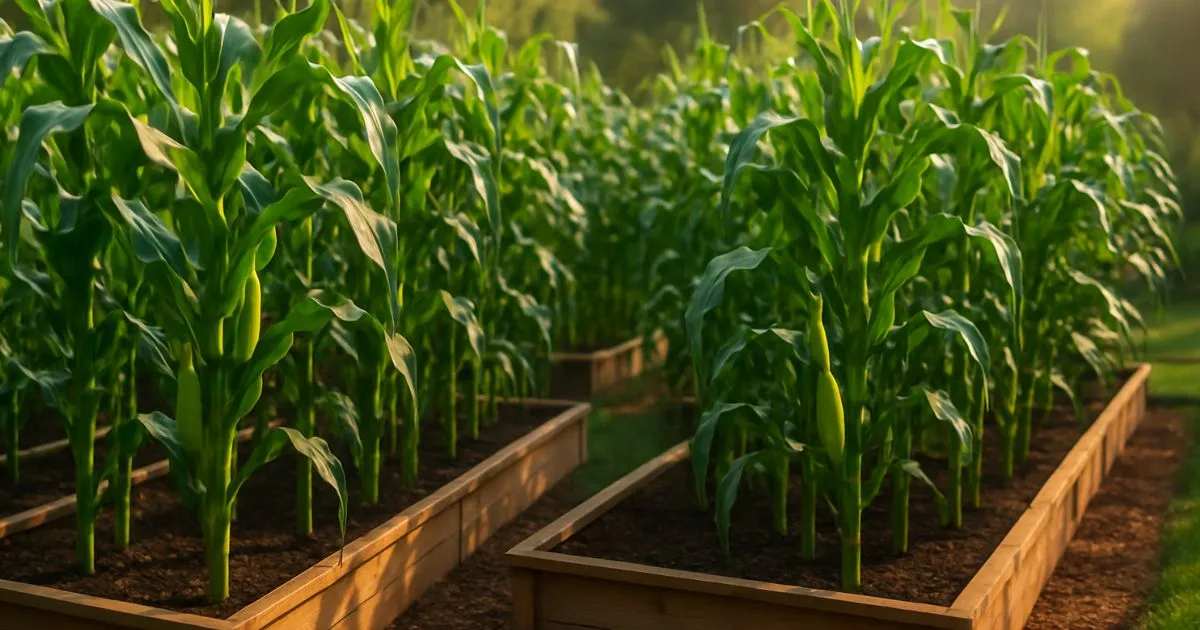
Growing corn in raised garden beds gives you the opportunity to enjoy homegrown corn even if you don’t have a large yard or traditional garden. Maybe you remember walking through tall cornfields as a child or helping peel back husks on warm summer evenings. Corn carries a sense of nostalgia and abundance — and with raised garden beds, you can recreate that feeling in even the smallest outdoor spaces.
Raised beds give you structure, control, and flexibility. They warm quickly, drain well, and offer nutrient-rich soil that supports strong corn growth. If you’ve been wondering whether corn really thrives in raised beds, the answer is yes. And with the right approach, your raised bed can become a compact, productive corn patch.
Table of Contents

Growing Corn in Raised Garden Beds: Why This Method Works So Well
Corn is often seen as a crop for big spaces, but raised beds meet many of corn’s natural needs.
Benefits of Raised Garden Beds for Corn
Raised beds offer several advantages:
- Better drainage
- Faster soil warming in spring
- Fewer weeds
- Customizable soil mix
- Reduced compaction
- Easy access for care and harvesting
For a deeper look at raised bed benefits and soil structure, see the University of Minnesota Extension:
https://extension.umn.edu/planting-and-growing-guides/raised-bed-gardening
Raised Beds vs. Containers vs. In-Ground Gardening
Here’s why raised beds are ideal for corn:
- Raised beds: The best combination of depth, width, warmth, and structure
- Containers: Portable but dry quickly and restrict root spread
- In-ground gardens: Large area but may suffer from compaction, poor drainage, or low soil quality
For general vegetable gardening comparisons, see the USDA home gardening overview:
https://www.usda.gov/topics/gardening
Best Corn Varieties for Growing Corn in Raised Garden Beds
Choosing the right variety sets you up for a successful harvest.
Top Sweet Corn Varieties for Raised Beds
These varieties are flavorful, productive, and manageable in raised garden beds:
- Early Sunglow — early, dependable
- Sugar Buns — very sweet, tender kernels
- Honey Select — triple-sweet hybrid
- Peaches & Cream — classic bicolor corn
For detailed information on corn varieties, check Cornell University’s vegetable variety guide:
https://cals.cornell.edu/home-gardening/vegetables
Compact Corn Varieties for Smaller Beds
If your raised beds are limited in size, choose:
- Dwarf sweet corn
- Short-season hybrid corn
- Mini popcorn varieties
- Short-stalk bicolor varieties
Corn Variety Comparison Table
| Variety | Height | Days to Harvest | Ideal Bed Depth | Notes |
|---|---|---|---|---|
| Early Sunglow | 4–5 ft | 60 days | 10–12 in | Great for beginners |
| Honey Select | 6 ft | 80 days | 12–14 in | Exceptionally sweet |
| Peaches & Cream | 5–6 ft | 75 days | 12–14 in | Popular home garden corn |
| Dwarf Sweet Corn | 3–5 ft | 60–70 days | 10 in | Perfect for small raised beds |
Preparing Raised Garden Beds for Corn
Corn needs well-prepared soil and enough room to grow tall.
Ideal Bed Size and Depth
Corn spreads its roots outward, so surface area is more important than extreme depth.
- Minimum size: 3 × 3 ft
- Ideal size: 4 × 6 ft
- Depth: 10–14 inches
Best Soil Mix for Corn
Corn thrives in loose, nutrient-rich soil. A recommended mix is:
- 40% topsoil
- 40% compost or aged manure
- 20% perlite or coarse sand
- Soil pH: 6.0–6.8
For more detail on raised bed soil builds, refer to Penn State Extension:
https://extension.psu.edu/soil-preparation
Fertilizing Before Planting
Corn is a heavy feeder, so enrich the soil thoroughly:
- Add compost
- Mix in nitrogen-rich amendments (e.g., blood meal)
- Use slow-release organic fertilizer
- Topdress with compost after planting
How to Plant Corn in Raised Garden Beds
Corn grows best when planted in blocks, not single rows.
Step-by-Step Planting Instructions
- Fill bed with prepared soil mix
- Add slow-release fertilizer
- Make shallow planting trenches
- Sow seeds 1 inch deep
- Space seeds 8–12 inches apart
- Plant in “blocks” to improve pollination
- Water deeply
- Add a light mulch layer
Why Block Planting Matters
Corn is pollinated by the wind. Planting in blocks increases the chance that pollen from tassels will fall onto nearby silks.
For more on wind pollination, UC ANR provides simple explanations:
https://ucanr.edu
Direct Sowing vs. Transplanting
- Direct sowing: Best method
- Starting indoors: Only if using deep pots and transplanting gently
- Avoid root disturbance to maintain healthy stalk development
Caring for Corn in Raised Garden Beds Throughout the Season
Once seedlings establish, ongoing care determines the quality of your harvest.
Watering Requirements
Corn needs consistent moisture:
- Deep watering 2–3 times weekly
- Increase during heat
- Soil should never dry out
- Drip irrigation or soaker hoses work best
The USDA water management page offers helpful insights:
https://www.usda.gov/water
Feeding Corn Throughout the Season
Corn grows rapidly and needs regular feeding:
- Early growth: High nitrogen fertilizer
- Midseason: Balanced fertilizer
- Before tasseling: Compost side-dressing
- During silking: Maintain consistent moisture
Supporting Tall Corn Stalks
Corn can reach 5–6 feet tall in raised beds. Support stabilizes stalks:
- Bamboo stakes
- Light trellis systems
- Loose ties
- Plant taller varieties along the outer edges of the bed
Managing Pests and Diseases
Common pests include:
- Aphids
- Corn earworms
- Leafhoppers
- Armyworms
Diseases include:
- Rust
- Smut
- Leaf spot
For organic pest control strategies, see University of Minnesota Extension:
https://extension.umn.edu/insects-infest-homes/vegetable-garden-pests
Harvesting, Storing, and Enjoying Corn from Raised Garden Beds
When to Harvest Corn
Your corn is ready when:
- Silks have turned brown
- Ears feel full
- Kernels release milky juice when pressed
How to Store Fresh Corn
To preserve flavor:
- Keep husks on
- Refrigerate immediately
- Freeze kernels or whole ears
Fresh corn tastes best when eaten as soon as possible.
Fresh Corn Salad Recipe
Ingredients Table
| Ingredient | Amount | Notes |
|---|---|---|
| Fresh corn kernels | 2 cups | From 3–4 ears |
| Cherry tomatoes | 1 cup | Halved |
| Red onion | 1/4 cup | Finely chopped |
| Olive oil | 1 tbsp | — |
| Lime juice | 2 tbsp | Fresh |
| Salt & pepper | To taste | Adjust seasoning |
Instructions
- Combine corn, tomatoes, and onion
- Add lime juice and oil
- Toss gently
- Season to taste
- Chill before serving
This recipe highlights the natural sweetness of your homegrown corn.
FAQs — Growing Corn in Raised Garden Beds
Is growing corn in raised garden beds effective?
Yes — raised beds provide ideal warmth, drainage, and structure for strong corn growth.
How deep should the soil be for corn?
A depth of 10–14 inches supports most corn varieties.
How many corn plants can a bed hold?
A 4 × 6 ft raised bed can typically hold 20–30 stalks.
Do you need to hand-pollinate raised bed corn?
Not always, but gently shaking tassels improves kernel fill.
How much should you water corn?
Water deeply and consistently, especially during tasseling and ear formation.
Conclusion — Start Growing Corn in Raised Garden Beds Today
Growing corn in raised garden beds allows you to enjoy fresh, sweet corn even with minimal space. With the right soil mix, proper spacing, consistent watering, and a little attention, your raised bed can become a thriving corn patch. Watching stalks rise, tassels form, and ears fill out is one of the most rewarding experiences in home gardening.
Start with one bed, choose a variety you’re excited to grow, and plant a handful of seeds.
Your own homegrown corn harvest is just a season away.