7 Steps to Growing Tomatoes Indoors: The Ultimate Year-Round Harvest Guide

Picture this: It is the middle of February. Outside, the sky is a bruised shade of gray, and the frost is clinging stubbornly to the windowpane. The wind howls, rattling the frames, reminding you that winter is far from over. You walk into your kitchen, not to the refrigerator, but to a lush, green corner filled with the earthy scent of vines. You reach out and pluck a vibrant, ruby-red cherry tomato, warm from the heat of the grow light. You pop it into your mouth, and it bursts—sweet, acidic, and tasting distinctly of sunshine.
For most of us, winter means settling for mealy, tasteless supermarket tomatoes that traveled thousands of miles just to disappoint our taste buds. But it doesn’t have to be that way. Gardening is more than just a hobby; it’s an act of hope and a reclamation of flavor. By bringing your garden inside, you aren’t just growing food; you are cultivating a sanctuary of life that defies the seasons.
Whether you live in a studio apartment or a house with limited yard space, the joy of growing tomatoes indoors is accessible, rewarding, and delicious. However, moving a sun-loving crop into your living room requires a specific strategy. You cannot simply throw a seed in dirt and hope for the best. You need to replicate the ecosystem of a warm July day within the four walls of your home.
Here is your comprehensive roadmap to mastering indoor gardening tomatoes, ensuring you have fresh produce even when the snow is falling.
Table of Contents
1. Choosing the Right Varieties for Indoor Gardening Tomatoes
To succeed, you must start with the right genetics. This is the step where most beginners fail before they even plant a seed. Tomatoes are naturally large, sprawling plants that want to climb six feet high and spread four feet wide. Trying to wrestle a standard “Beefsteak” or “Early Girl” tomato plant in a living room corner is a recipe for frustration.
For successful indoor gardening tomatoes, you need plants that are bred to be compact.
Determinate vs. Indeterminate Varieties
Understanding growth habits is crucial.
- Indeterminate Varieties: These are vining plants that continue to grow, flower, and set fruit until a hard frost kills them. In an outdoor garden, they are majestic. Indoors, they are unruly monsters that will take over your lighting setup and become unmanageable.
- Determinate Varieties: These are bush-type plants. They grow to a genetically determined height, stop growing, set their fruit all at once (or over a short period), and are much easier to contain.
For the absolute best results, you should look for a specific subset of determinate plants known as Dwarf or Micro-Dwarf varieties. These are the holy grail for growing tomatoes indoors.
Top Cultivars for Indoor Success
Through years of trial and error, the indoor gardening community has identified specific champions that thrive under artificial lights and in smaller pots.
- Tiny Tim: This is perhaps the most famous heirloom micro-dwarf. It grows only 12-18 inches tall and looks like a small tree. It is a prolific producer of cherry-sized fruit with a tart, classic tomato flavor.
- Red Robin: If you want sweetness, this is your plant. Red Robin stays compact (often under 12 inches) and produces fruit that is sweeter than Tiny Tim. It is excellent for hanging baskets or lining up on a shelf.
- Micro Tom: This is one of the smallest varieties in the world, sometimes topping out at just 6-8 inches. While the yield is smaller, you can fit several of these on a single windowsill.
- Siberian: If your indoor space is drafty or you keep your thermostat low to save money, the Siberian tomato is a smart choice. It is bred to set fruit at lower temperatures (down to 38°F/3°C, though it prefers warmer), making it a rugged option for cooler homes.
For a deeper dive into plant genetics and growth habits, check out this guide from the Oregon State University Extension Service.
2. The Essential Setup for Growing Tomatoes Indoors
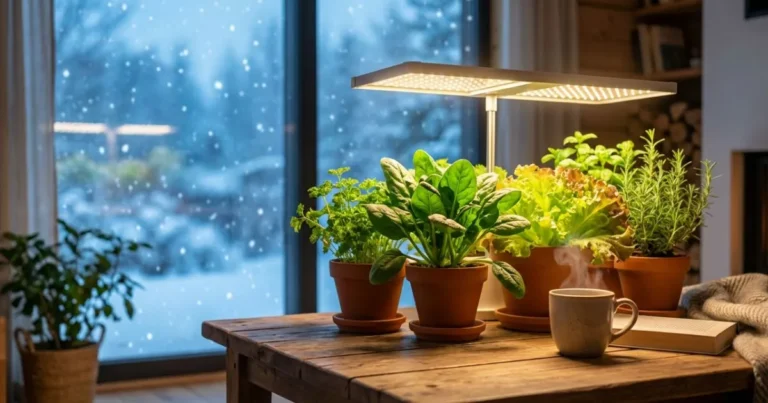
You cannot rely on a windowsill alone. This is a hard truth you need to accept early. Even a south-facing window in winter receives light that is low in intensity and short in duration. Tomatoes are energy-hungry; to produce sugar-filled fruit, they need high-intensity photosynthesis.
Lighting: The Most Critical Factor
If you skimp on lighting, your plants will become “leggy”—tall, weak stems stretching desperately for the sun—and they will likely drop their flowers before fruit ever forms.
- The Requirement: Tomatoes generally require 12–16 hours of light daily.
- The Solution: Invest in full-spectrum LED grow lights. You don’t need the purple-hued “blurple” lights of the past; modern full-spectrum white LEDs are pleasant to the eye and excellent for plants.
- Positioning: Keep the lights close. For seedlings, the light should be 2-4 inches from the top of the leaves. As the plant grows, raise the light, but keep that close proximity to ensure the plant stays stocky and dense.
Soil and Containers
Never, under any circumstances, go outside and dig up dirt from the ground for your indoor pots. Garden soil is too heavy for containers; it compacts, suffocating the roots, and it often contains dormant insect larvae and fungal spores.
- The Mix: Use a high-quality, sterile potting mix. Look for a blend that contains coco coir or peat moss for moisture retention, and plenty of perlite (the white rocky bits) for drainage and aeration. Roots need oxygen just as much as they need water.
- Container Size:
- Micro varieties (like Red Robin): A 6-inch pot or a 1-gallon container is sufficient.
- Standard Dwarf varieties: Aim for 3 to 5-gallon pots.
- Drainage: Ensure your pots have holes in the bottom. Sitting in stagnant water leads to root rot, which is fatal and smells terrible.
3. Germination and Seedling Care
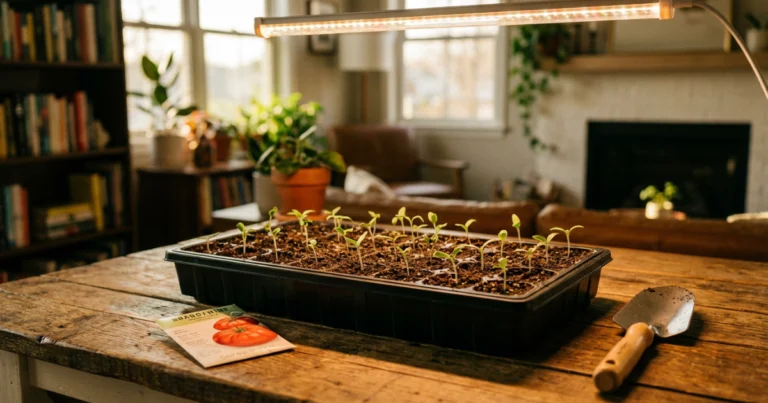
While you can sometimes find tomato transplants at nurseries, growing tomatoes indoors is best started from seed. This prevents you from accidentally bringing pests like aphids or spider mites into your home from the garden center.
The Germination Process
- Planting: Fill your small seed-starting cells with damp starter mix. Plant your seeds about ¼ inch deep.
- The Heat Factor: Tomatoes are tropical in origin. They love warmth. For fast germination, use a seedling heat mat to keep the soil temperature between 70-80°F (21-27°C). Cold soil results in slow, uneven germination or rotting seeds.
- Humidity: Cover the tray with a humidity dome or plastic wrap to keep moisture in.
- The Emergence: As soon as you see the green “loops” of the sprout breaking the surface, remove the dome and the heat mat, and turn on your grow lights immediately.
Pro Tip: If the seed coat (the shell) gets stuck on the seedling leaves, mist it with water to soften it. Do not pull it off dry, or you might rip the leaves off.
4. Nurturing Your Plants: Water, Feed, and Pollinate
The daily rhythm of indoor gardening tomatoes requires a different approach than outdoor farming. You are the master of their universe; they rely on you for everything.
Watering Best Practices
Indoor air is usually much drier than outdoor air due to heating systems (HVAC). However, pots dry out differently than the ground.
- The Finger Test: Do not water on a schedule (e.g., “every Monday”). Water when the plant needs it. Stick your finger into the soil up to the second knuckle. If it feels dry, water thoroughly until water runs out of the bottom. If it feels damp, wait.
- The Weight Test: Lift the pot. If it feels light, it’s thirsty. If it feels heavy, let it be.
- Warning: Overwatering is the #1 killer of indoor tomatoes. It drowns the roots and invites fungus gnats.
Fertilizing Schedule
Nutrients leach out of pots quickly because of frequent watering. The soil in the pot is a limited resource bank.
- Vegetative Stage: When the plant is just growing leaves, a balanced fertilizer (like a 10-10-10 NPK) is fine.
- Flowering Stage: Once you see the first yellow flowers, switch to a fertilizer lower in nitrogen and higher in phosphorus and potassium (like a 5-10-10 or a specific tomato feed).
- Why? High nitrogen at this stage promotes leafy green growth at the expense of fruit production. You want tomatoes, not a salad bush. Apply a water-soluble fertilizer at half-strength every two weeks.
The Art of Hand Pollination
This is the step most beginners forget when growing tomatoes indoors. Outside, wind shakes the pollen loose, and bees visit the flowers. Inside, the air is still, and there are no insects. You must play the role of the pollinator.
Fortunately, tomato flowers are “perfect,” meaning they contain both male and female parts. They don’t need pollen from a different flower; they just need their own pollen to be shaken loose to fall onto the pistil.
How to Pollinate Manually:
- The Tap Method: Gently flick or shake the stems of the flowers every day you see them open.
- The Toothbrush Trick: For the highest success rate, take an electric toothbrush, turn it on, and touch the back of the flower cluster (the stem part) for 2-3 seconds. You will actually see a cloud of yellow dust (pollen) fall. This mimics the vibration frequency of a bumblebee’s wings. Do this daily around noon when the humidity is lower.
5. Troubleshooting Common Indoor Tomato Problems
Even in a controlled environment, issues arise. Being able to identify them early saves your harvest.
Yellowing Leaves
If the bottom leaves are turning yellow and falling off, this is often a nitrogen deficiency or a sign the plant is becoming “root bound” (outgrowing its pot). However, if the yellowing is accompanied by wet soil, you are overwatering. Check your drainage.
Edema
Do you see bumpy, crystal-like swellings or blisters on the undersides of the leaves? This is edema. It happens when the plant takes up water faster than it can transpire it through the leaves.
- The Fix: Your air is too stagnant or humid. Add a small oscillating fan to the room to gently move air around the plants. This aids transpiration and strengthens the stems.
The Dreaded Pests
Indoor environments lack the predators (like ladybugs) that keep pests in check outside.
- Fungus Gnats: Tiny black flies crawling on the soil. They thrive in wet soil. Let the top inch of soil dry out completely between waterings and use yellow sticky traps.
- Aphids/Whiteflies: If you see these sap-suckers, isolate the plant immediately. Treat with Neem oil or insecticidal soap. Be vigilant; they multiply fast.
6. Harvesting and Using Your Indoor Crop
The moment of truth has arrived. You have nurtured this plant for two months, and now the fruit is changing color. Harvesting correctly ensures the plant keeps producing.
When to Pick
Commercial growers pick tomatoes green and gas them with ethylene to turn them red. That is why they taste like cardboard. You have the luxury of patience.
Wait until the fruit is fully colored—whether that is red, orange, or yellow depending on the variety. Give the fruit a gentle squeeze; it should have a slight “give,” similar to a ripe peach, but not be mushy.
- Pro Tip: If you have a cluster ripening unevenly, you can pick them at the “breaker” stage (when they are about 50% colored) and let them finish ripening on the counter. This prevents the plant from putting too much energy into finished fruit, encouraging it to start new flowers. Never refrigerate your tomatoes. Cold temperatures destroy the flavor compounds and ruin the texture.
Recipe: Fresh Indoor Caprese Bruschetta
Celebrate your hard work with a recipe that highlights the fresh, acidic pop of growing tomatoes indoors. This simple dish relies entirely on the quality of the produce—something your indoor garden delivers in spades.
Ingredients Checklist:
| Ingredient | Quantity | Preparation Notes |
|---|---|---|
| Homegrown Cherry Tomatoes | 1 Cup | Halved or quartered depending on size |
| Fresh Basil Leaves | 1/4 Cup | Chiffonade (rolled and thinly sliced) |
| Fresh Mozzarella | 1/2 Cup | Cubed small (pearls work best) |
| French Baguette | 1 Loaf | Sliced into 1/2 inch rounds |
| Extra Virgin Olive Oil | 2 Tbsp | Use your highest quality oil for drizzling |
| Garlic Clove | 1 | Peeled and kept whole |
| Balsamic Glaze | 1 Tbsp | Optional, for sweetness |
| Sea Salt & Cracked Pepper | To Taste | Flaky salt is best for finishing |
Instructions:
- Toast the Bread: Brush the baguette slices with a little olive oil and toast them in the oven or a skillet until golden brown. While they are still hot, rub the raw garlic clove over the rough surface of the bread. This melts a subtle garlic flavor into the toast.
- Mix the Topping: In a small bowl, combine the chopped tomatoes, mozzarella cubes, fresh basil, and the remaining olive oil. Toss gently. Season generously with salt and pepper.
- Assemble: Spoon the tomato mixture onto the warm bread.
- Finish: Drizzle with balsamic glaze if desired. Serve immediately while the bread is warm and the tomatoes are cool.
Frequently Asked Questions About Growing Tomatoes Indoors
Q: How long does it take when growing tomatoes indoors to get fruit?
A: Patience is key, but indoor varieties are often bred for speed. Generally, it takes 60 to 80 days from seed to harvest. Dwarf varieties like ‘Tiny Tim’ are speed demons, often producing fruit in as little as 55 days under optimal lighting.
Q: Do I really need grow lights for indoor gardening tomatoes?
A: Yes. This is the hill we must die on. While a south-facing window helps, the winter sun is low in the sky, filtered by glass, and often obscured by clouds. Without supplemental LED lights, your plants will likely fail to fruit. If you are serious about the harvest, you need lights.
Q: Can I grow full-sized beefsteak tomatoes indoors?
A: It is technically possible, but it is very difficult and generally not recommended for beginners. Large indeterminate varieties require massive pots (10+ gallons) and 6-8 feet of vertical space. They are prone to disease due to lack of airflow indoors. For a happy experience growing tomatoes indoors, stick to dwarf or cherry varieties.
Q: What is the best temperature for indoor tomatoes?
A: Tomatoes love a cozy room. Aim for daytime temperatures between 70-75°F (21-24°C). Nighttime temperatures should drop slightly but try to keep them no lower than 65°F (18°C). If your grow room gets too cold, the plants will grow very slowly and may drop their blossoms.
Q: My plants have flowers but no fruit. What is wrong?
A: This is almost always a pollination issue or a temperature issue. If it is too hot (over 90°F) or too cold, pollen becomes sterile. If the temperature is fine, you likely aren’t shaking the plants enough. Try the electric toothbrush method mentioned in Step 4!
Conclusion
Growing tomatoes indoors is a defiance of the seasons. It is a declaration that you do not have to wait for the calendar to turn to June to enjoy the taste of summer. It allows you to keep your thumb green and your plate colorful, even when the world outside is dormant and gray.
By choosing the right dwarf varieties, investing in a proper lighting setup, and mastering the simple art of hand pollination, you can enjoy the unmatched taste of a vine-ripened tomato any day of the year. It starts with a single seed and a little bit of patience. Start small with one or two pots, and before you know it, you’ll have a thriving indoor garden providing fresh produce right from your countertop.
So, don’t let the frost stop you. Turn on those grow lights, get your hands in the soil, and bring the harvest home.