10 Steps on How to Grow Vegetables in the Winter Indoors for a Fresh Harvest
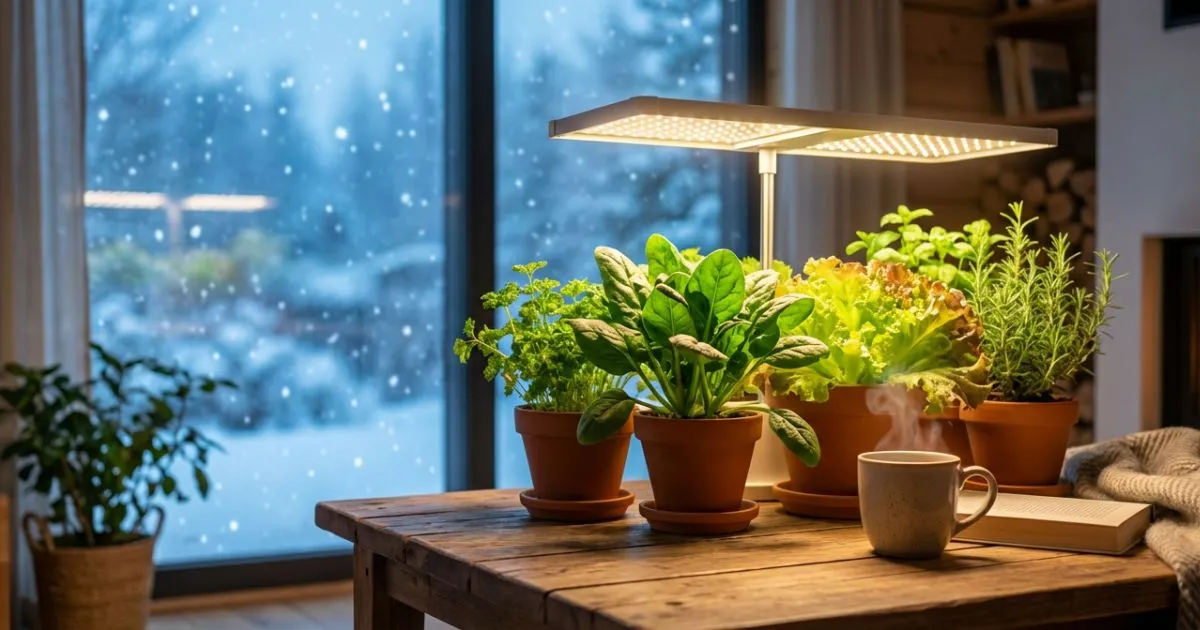
Imagine the silence of a deep winter morning. Outside your window, the world is painted in stark shades of grey and white. The trees are bare skeletons rattling in the biting wind, the ground is frozen solid, and the sky hangs low and heavy. It is the time of year when gardeners typically hang up their trowels and resign themselves to months of waiting.
Now, turn away from the window. Picture a corner of your home bathed in warm, bright light. The air here smells faintly of damp earth and crushed leaves. You reach out and harvest a handful of vibrant, emerald-green spinach or pluck a crisp radish from the soil.
This contrast—the lifeless cold outside versus the thriving abundance inside—is one of the most satisfying feelings a gardener can experience.
The “winter blues” are real, and the tasteless, expensive produce found in supermarkets in January does little to help. But the growing season doesn’t have to end when the first frost hits. Mastering how to grow vegetables in the winter indoors is a quiet act of resilience. It is a way to reclaim your connection to nature when the world is asleep. With the right setup and a little knowledge, anyone can harvest fresh greens while the snow falls.
This guide will walk you through exactly how to turn your home into a winter oasis.
Table of Contents
1. Assessing the Winter Light Situation
Before you plant a single seed, you must face the biggest challenge of winter gardening: the sun. Or rather, the lack of it.
The Winter Light Deficit
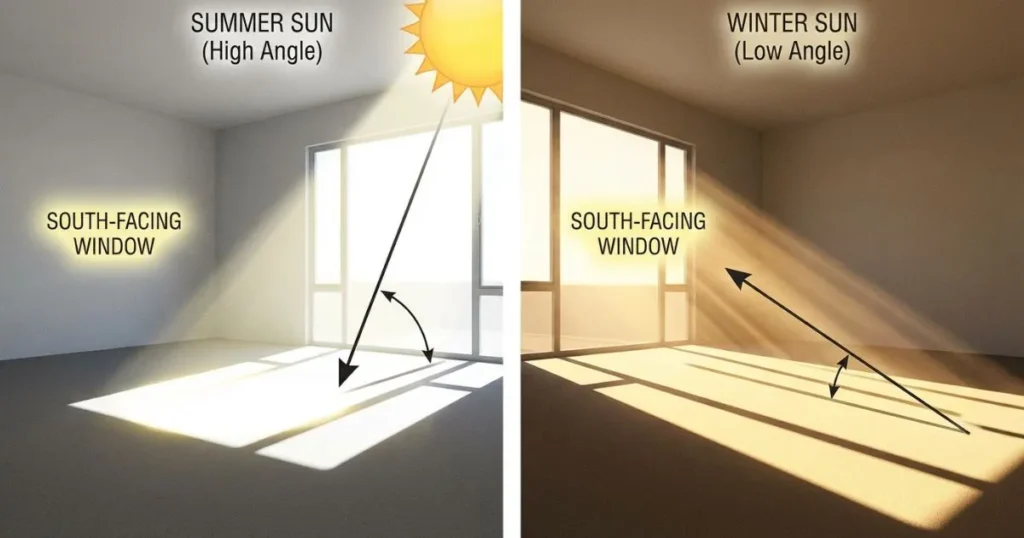
In summer, the sun is high and intense. In winter, it sits low on the horizon, casting long shadows and providing significantly weaker energy. Furthermore, the days are shorter. A plant that needs 12 hours of light might only get 8 hours of weak sun in December.
To succeed, you need to audit your windows:
- South-Facing Windows: These are your best hope for natural light. They capture the most solar energy throughout the day. If you are trying to grow without artificial lights, your plants must live here.
- East and West-Facing Windows: These provide limited light. In winter, they are often too dim for robust vegetable growth, though they might support low-light houseplants.
- North-Facing Windows: These are essentially dark zones for vegetables in winter. Do not rely on them.
For a better understanding of solar angles, you can check solar path charts provided by resources like the University of Oregon Solar Radiation Monitoring Lab.
2. Choosing the Best Crops for Winter Indoor Gardening
You cannot trick a tomato plant into thinking it is July without expensive, high-intensity equipment. To keep things simple and successful, you should work with the season, not against it. Focus on “Cool-Season Crops”—plants that naturally thrive in lower temperatures and lower light.
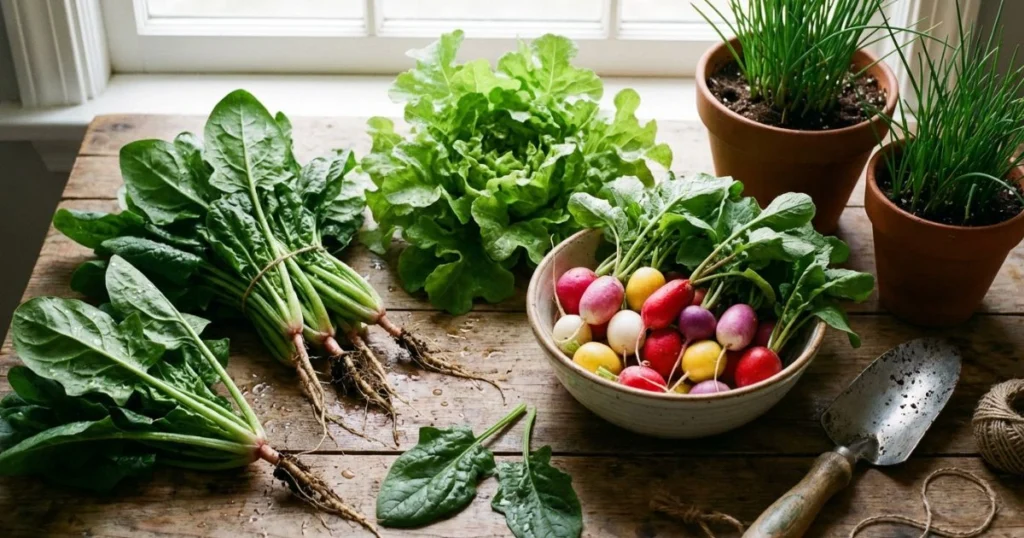
Top Winter Picks
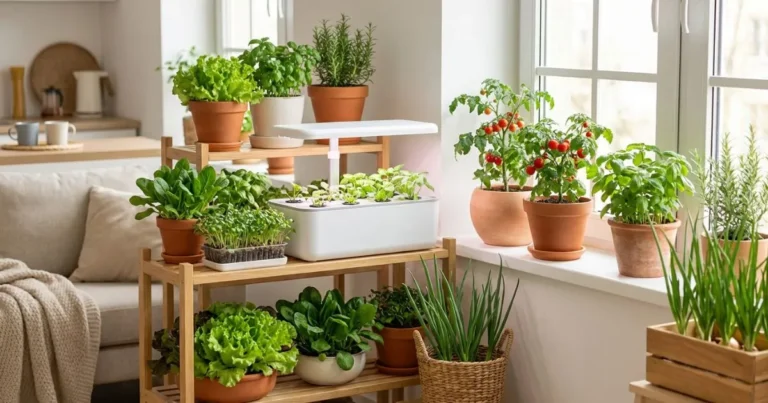
- Leafy Greens: Spinach, Kale, and Swiss Chard are the champions of winter. They tolerate shade better than any other vegetable and actually taste sweeter when grown in cooler temperatures.
- Lettuce: Look for “loose-leaf” varieties like Black Seeded Simpson. They grow fast and don’t require the intense light needed to form a tight head.
- Root Veggies: You might be surprised, but you can grow radishes and round carrots (like Paris Market) in pots. They don’t need huge depth, and they love the cool indoor air.
- Herbs: Parsley, Cilantro, and Chives are hardy herbs that adapt well to indoor life. (Avoid Basil in winter unless you have a very warm spot and bright lights; it hates the cold).
Strategy: Avoid trying to grow massive, energy-hungry plants like pumpkins, corn, or beefsteak tomatoes. Stick to compact, leafy, and root crops.
3. Creating the Perfect Soil Environment
This is a critical rule for learning how to grow vegetables in the winter indoors: Never bring outdoor garden soil inside.
Outdoor soil is heavy. In a garden bed, worms and weather keep it aerated. In a pot, it collapses into a dense brick that suffocates roots. Worse, it is teeming with insect eggs and fungi that will wake up in the warmth of your home and infest your plants.
You need a sterile, “soilless” potting mix. It must be fluffy enough to hold air but absorbent enough to hold water.
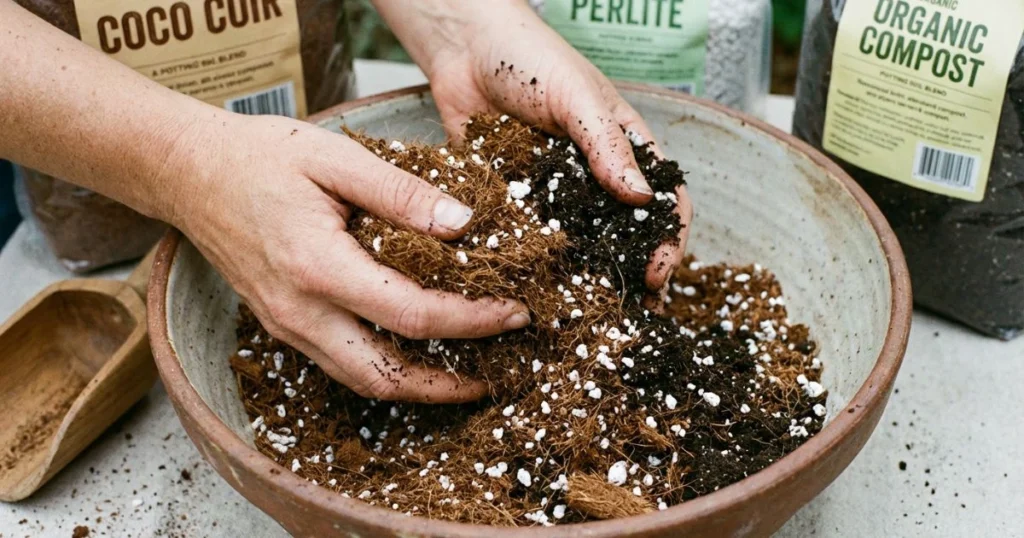
DIY Winter Indoor Potting Mix Recipe
Table: Sterile Indoor Soil Mix Ingredients
| Ingredient | Ratio | Purpose |
|---|---|---|
| Coco Coir or Peat Moss | 2 Parts | The base. It retains moisture without getting boggy, which is crucial in dry winter air. |
| Perlite or Vermiculite | 1 Part | These white volcanic rocks ensure airflow and drainage, preventing root rot. |
| High-Quality Compost | 1 Part | Provides slow-release nutrients to feed your plants for the first month. |
| Worm Castings | 1/2 Part | A natural “superfood” fertilizer to boost seedling growth. |
Mix these in a bucket with water until damp before filling your pots.
4. The Game Changer: Grow Lights
If you rely solely on a window in January, your seedlings will likely become “leggy”—tall, thin, and weak as they stretch desperately for light. To truly succeed at how to grow vegetables in the winter indoors, you should invest in grow lights.
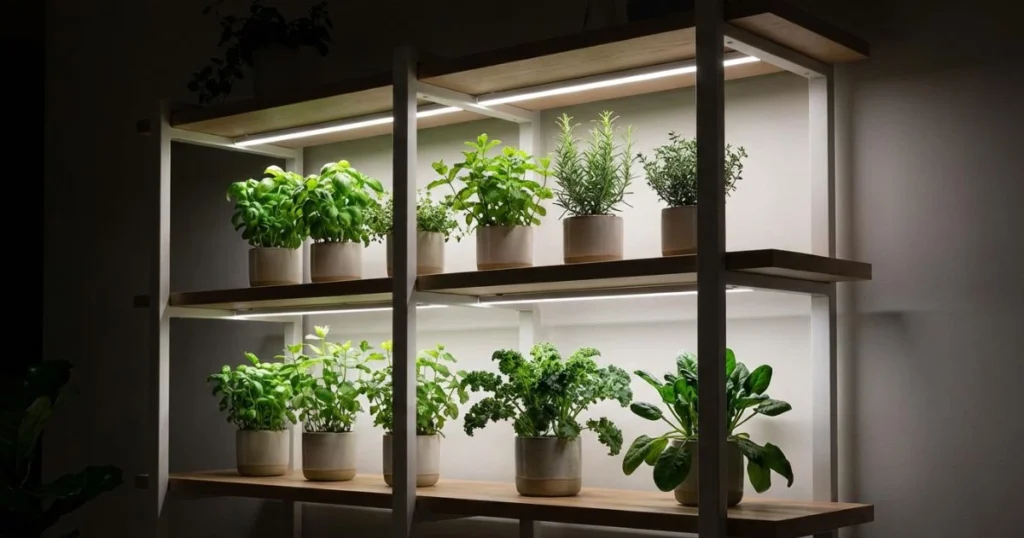
Why Artificial Light is Necessary
Vegetables need a specific intensity of light (measured in PAR) to photosynthesize efficiently. Winter windows filter out UV light and simply don’t provide enough “food” for the plants.
Types of Lights
- Full Spectrum LED: These are the modern standard. They use very little electricity, produce almost no heat (so they won’t burn plants), and provide the full range of light plants need. Look for “white” LEDs rather than the old purple ones.
- Fluorescent (T5): These are the long tube lights often found in shops. They are great for starting seeds and growing leafy greens but lack the “punch” for fruiting crops.
Usage Guide:
- Distance: Keep LEDs 6–12 inches above the top of your plants.
- Timing: Use a mechanical timer to run the lights for 12–16 hours a day. Plants need a routine.
5. Managing Temperature and Humidity
Your home environment in winter is actually quite hostile to plants, but not for the reasons you might think. It isn’t the cold; it’s the dry air.
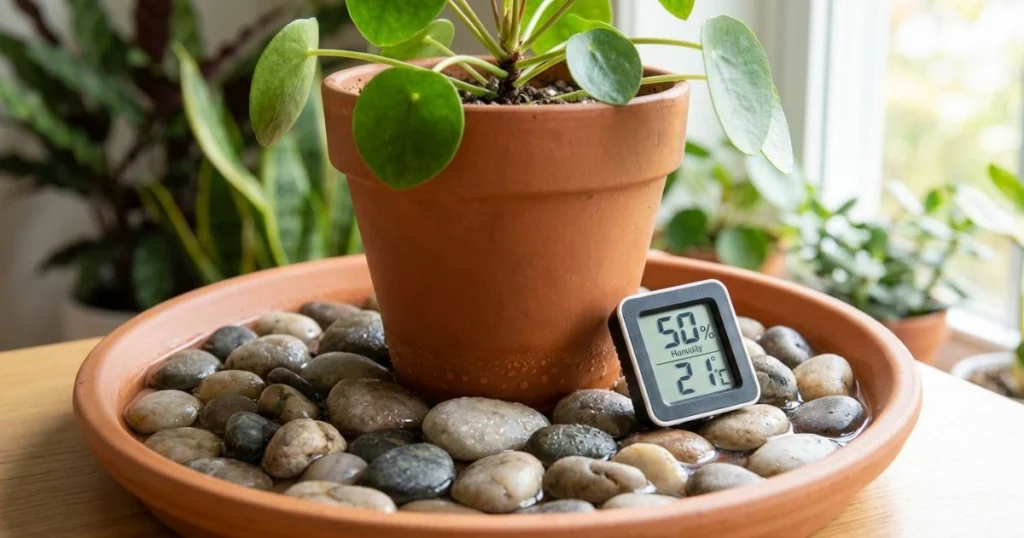
The Heating Issue
Central heating systems strip moisture from the air. While comfortable for humans, this creates a desert-like environment with humidity levels often dropping below 20%. Most vegetables prefer 40–50% humidity. If the air is too dry, leaves will crisp at the edges and spider mites (who love dry heat) will attack.
Temperature Sweet Spot
Most cool-weather crops prefer temperatures between 60°F and 70°F (15°C–21°C).
- Draft Alert: Do not place your plants directly against a freezing window pane. Conversely, do not place them directly in the path of a hot air vent. Both extremes will shock the plant.
Humidity Hacks
- Pebble Trays: Place your pots on a tray filled with pebbles and water. As the water evaporates, it creates a humid micro-climate around the leaves.
- Grouping: Group your plants together. They release moisture through transpiration, helping each other stay hydrated.
- Humidifier: Running a standard room humidifier benefits both your plants and your own sinuses in winter.
6. Watering: The Winter Balance
Watering is where most winter gardeners fail. They stick to their summer schedule and end up drowning their plants.
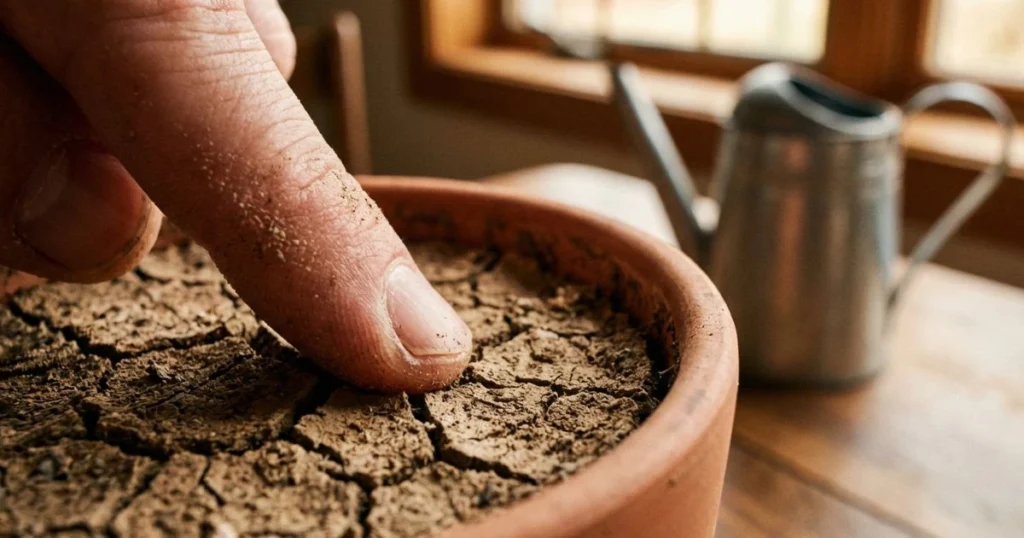
Slower Growth = Less Water
Because light levels are lower and temperatures are cooler, plant metabolism slows down. They drink less water than they do in July. If you water too much, the soil stays soggy, leading to root rot and fungus gnats.
- The Finger Test: Ignore the calendar. Stick your finger an inch into the soil. If it feels dry, water. If it is even slightly damp, wait.
- Bottom Watering: This is the best technique for winter. Place your pots in a shallow tray of water for 30 minutes. The soil will wick up exactly what it needs. This keeps the top layer of soil dry, which discourages pests.
7. Dealing with Winter Pests
You might think winter means no bugs, but indoors, pests are in paradise. There are no ladybugs or predatory wasps to eat them, so populations can explode.
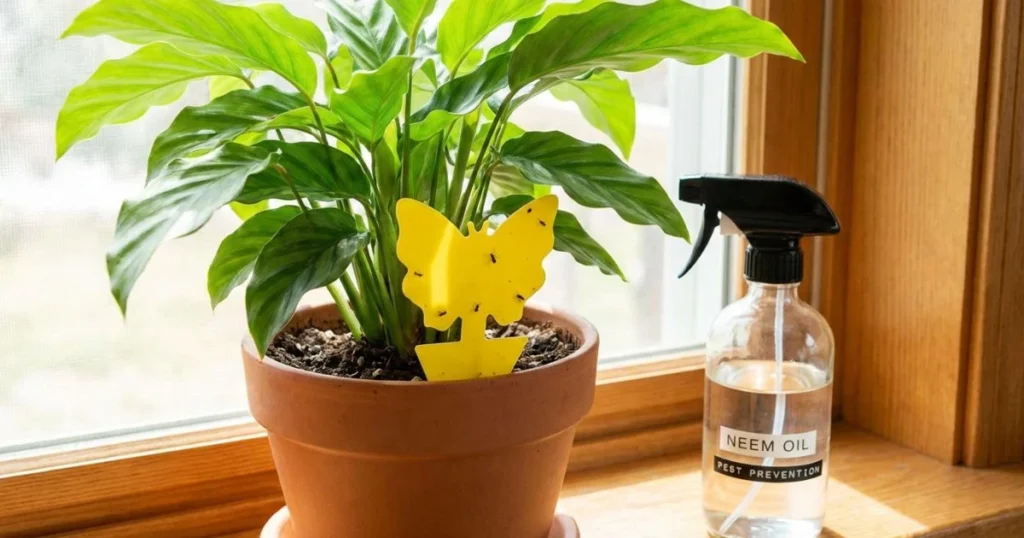
Common Culprits
- Fungus Gnats: These tiny black flies buzz around the soil surface. Their larvae eat plant roots. They thrive in wet, soggy soil (another reason to avoid overwatering).
- Spider Mites: These look like tiny moving dust specks and leave fine webbing on leaves. They love hot, dry air.
Organic Solutions
- Neem Oil: A natural spray that disrupts the life cycle of many pests.
- Sticky Traps: Yellow sticky cards placed near the soil capture adult gnats.
- Airflow: A small fan blowing gently on your plants strengthens stems and discourages bugs from landing.
For a comprehensive approach, look into Integrated Pest Management (IPM) strategies for home gardens.
8. Harvesting Techniques for Continuous Yield
The goal of learning how to grow vegetables in the winter indoors is to have a steady supply of food, not just one harvest.
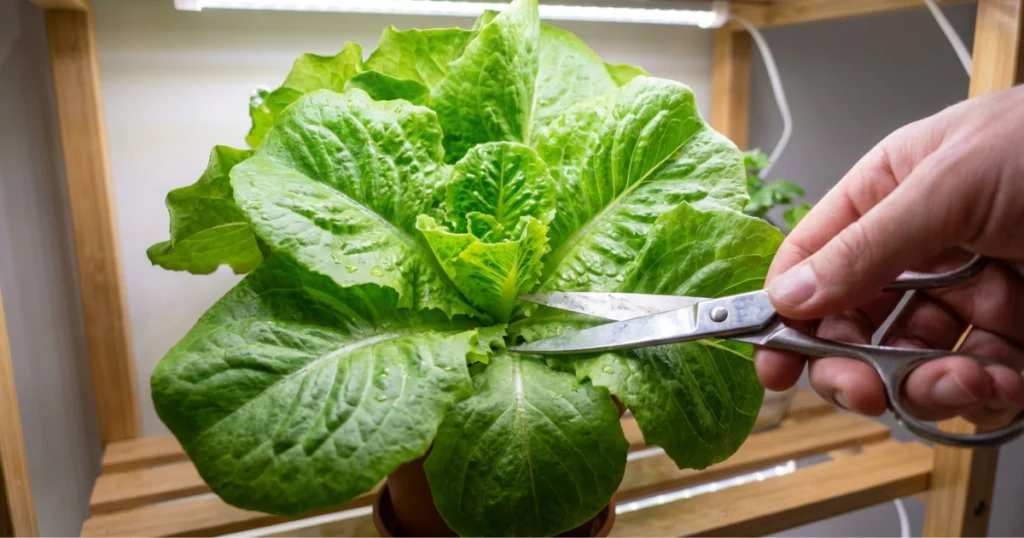
The “Cut-and-Come-Again” Method
For leafy greens like lettuce, spinach, and kale, never pull the whole plant out of the soil (unless you are done with it).
Instead, use scissors to snip off the outer, largest leaves. Leave the small baby leaves in the center (the crown) intact. The plant will continue to produce new growth from the center, allowing you to harvest from the same plant for weeks or even months.
Microgreens: The Quick Fix
If you are impatient, try microgreens. These are simply vegetable seedlings harvested when they are 2-3 inches tall. They are packed with nutrients and are ready to eat in just 10–14 days. They are the perfect morale booster in the dead of winter.
FAQ: Common Questions on How to Grow Vegetables in the Winter Indoors
Q: Is it expensive to figure out how to grow vegetables in the winter indoors?
It is scalable. You can start for almost zero cost using recycled yogurt containers, a sunny window, and a $3 packet of seeds. However, investing $30–$50 in a good LED grow light will significantly increase your success rate and yield.
Q: Do vegetables grow slower indoors in winter?
Yes. Even with grow lights, the ambient conditions often result in slightly slower growth rates compared to the vigorous energy of summer. Patience is key.
Q: Can I move my outdoor plants inside for winter?
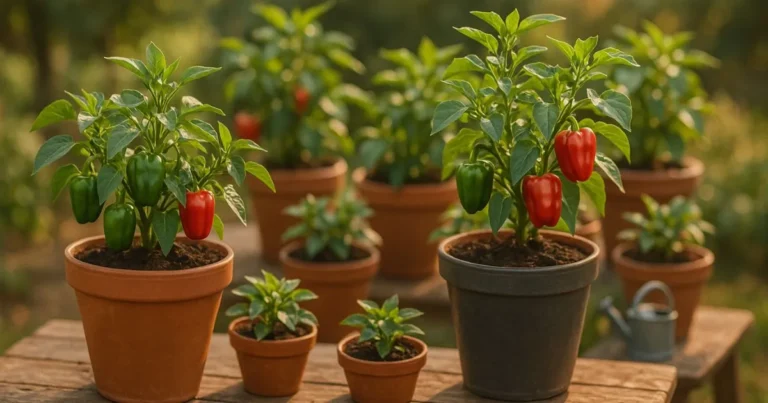
You can, but it is risky. Bringing outdoor plants inside often brings outdoor pests (aphids, slugs, ants) that can infest your sterile indoor garden. It is usually safer and cleaner to start fresh seeds indoors. Exception: Hot peppers can be pruned back and overwintered successfully if you clean them thoroughly.
Q: What is the easiest vegetable to grow in winter?
Leafy greens (Lettuce, Spinach) or Radishes. They are fast, shade-tolerant, and forgiving of mistakes.
Conclusion: Bringing Life to the Dead of Winter
Mastering how to grow vegetables in the winter indoors is about more than just the food. It is about the ritual. It is about waking up on a dark, freezing Tuesday morning and seeing a vibrant green leaf unfurling under your grow light. It is a daily reminder that life continues, that spring will come again, and that you have the power to create abundance even in the scarcest times.
So, don’t let your gardening gloves gather dust this winter. Clear off a shelf, turn on a light, and plant a seed. Your winter harvest awaits.