7 Secrets to a Thriving Indoor Tomato Plant: Your Complete Guide to Winter Harvests

Close your eyes for a moment. Imagine standing in a sun-drenched garden in mid-July. You reach out to brush against a thick, green vine, and that distinct, spicy, earthy aroma hits you instantly. It is the scent of summer. It triggers memories of backyard barbecues, warm soil, and the simple joy of eating something straight from the vine.
Now, open your eyes. The reality is likely different. Perhaps it is a gray February afternoon, the trees are bare, and the grocery store tomatoes look like pale, red tennis balls and taste like damp cardboard.
But what if you could bridge that gap? What if you could bring that sensory experience of July into your living room in the dead of winter?
Cultivating an indoor tomato plant is not just about food production; it is an act of defiance against the seasons. It is about reclaiming flavor and bringing a pulse of vibrant life into your home environment. While tomatoes are notoriously high-maintenance—often acting like the divas of the vegetable world—growing them indoors is entirely possible. It just requires a shift in strategy. You cannot treat your carpeted living room like a backyard plot.
If you are ready to trade winter blues for lush greens and ruby reds, here is your comprehensive, seven-step roadmap to mastering the art of indoor gardening tomatoes.
Table of Contents
1. Selecting the Perfect Indoor Tomato Plant Variety
The journey begins before you even touch the soil. The single most common reason people fail at growing tomatoes inside is that they choose the wrong genetics.
If you grab a packet of “Beefsteak” or “Better Boy” seeds, you are setting yourself up for a battle you will lose. Those are indeterminate varieties, meaning they are vining plants that want to grow six to eight feet tall and spread just as wide. Unless you live in a warehouse with skylights, an indeterminate indoor tomato plant will quickly take over your space, tangle into your blinds, and fail to produce fruit because it is spending all its energy growing stems.
To succeed, you need to think small.
Determinate vs. Indeterminate: What You Need to Know
You need a plant that knows when to stop growing. These are called determinate varieties. They grow to a genetically set height, flower, set their fruit, and then stop. They are bushier, sturdier, and much easier to manage indoors.
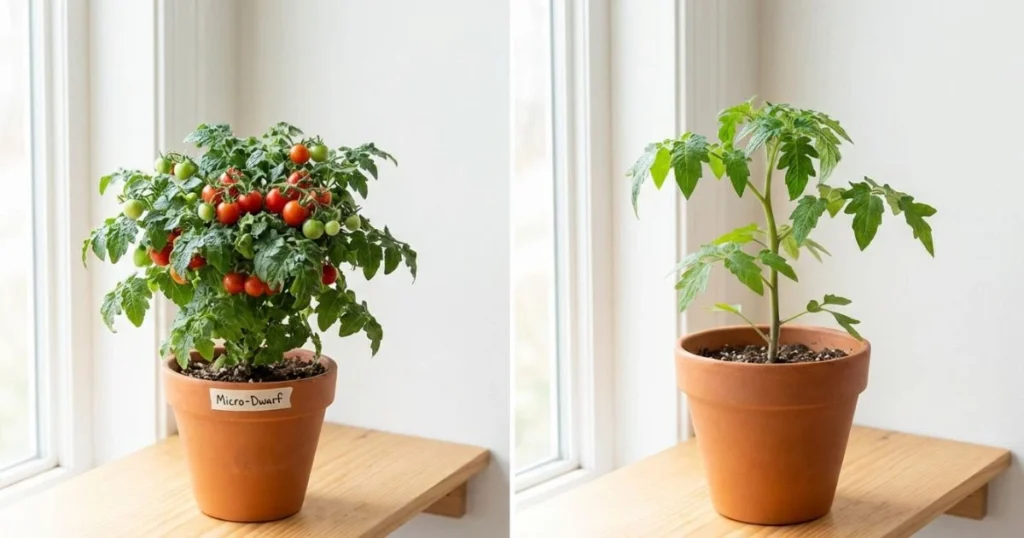
However, within the determinate category, there is a specific sub-category that is the holy grail for indoor growers: the Micro-Dwarf.
The Micro-Dwarf Revolution
Micro-dwarf tomatoes are bred specifically for containers. They typically grow between 6 and 12 inches tall, looking more like a decorative houseplant than a vegetable crop, yet they are prolific producers.
Here are three champions you should consider:
- Tiny Tim: The classic choice. It grows about 12 inches tall and produces tart, cherry-sized fruit. It is incredibly reliable for beginners.
- Orange Hat: If you want something sweeter, this variety produces bright orange, sugary fruit on a plant that rarely exceeds 9 inches in height.
- Vilma: Known for its sturdy stems and heavy yield, Vilma is a compact powerhouse that stays neat and tidy on a windowsill or shelf.
For a deeper dive into container-friendly varieties, you can check resources like the Oregon State University Extension or browse specialized catalogs from heirloom seed suppliers.
2. Lighting: The Engine of Your Indoor Tomato Plant
Here is the hard truth: Your indoor tomato plant does not care about how bright your living room looks to human eyes. Our eyes are amazing at adjusting to low light; plants are not. Tomatoes are “full sun” crops, meaning they evolved to crave high-intensity direct sunlight for 8 to 10 hours a day.
Why Window Light Isn’t Enough
Even a south-facing window in winter is usually insufficient. Window glass filters out UV rays, and the winter sun is low on the horizon, providing weak intensity. If you rely solely on a window, your plant will become “leggy.” This means the stem stretches desperately toward the light, becoming thin and weak. Eventually, it will collapse under its own weight or drop its flowers because it lacks the energy to create fruit.
To get a harvest, you need to bring the sun inside.
Choosing the Right Grow Light
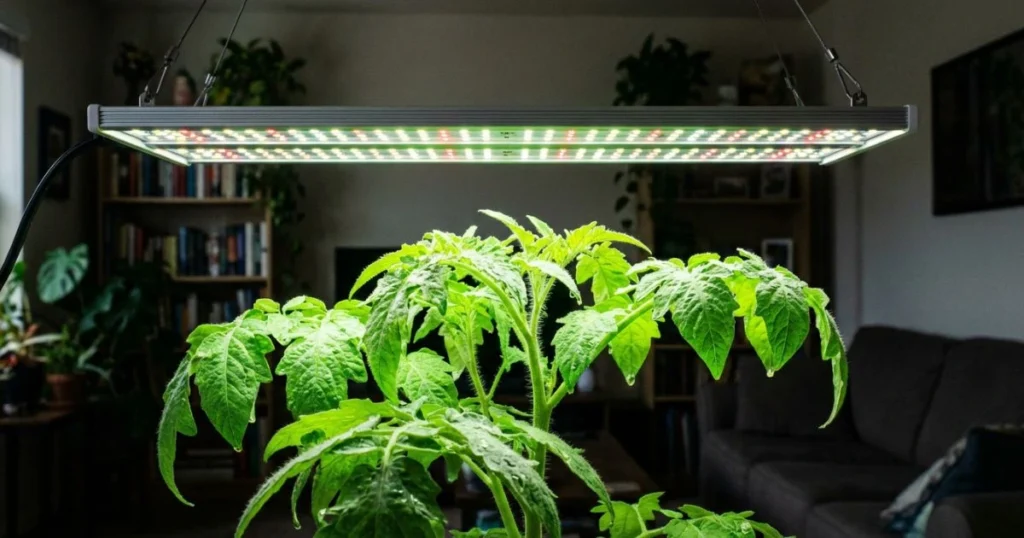
You do not need industrial greenhouse equipment, but you do need a dedicated grow light.
- Go LED: Modern full-spectrum LED grow lights are energy-efficient and emit a white light that looks pleasant in a home (unlike the harsh purple “blurple” lights of the past).
- The Distance Rule: The most critical factor is proximity. Keep your light 2 to 4 inches above the top of your indoor tomato plant. As the plant grows, raise the light. This intense proximity mimics the power of the sun and keeps the plant short and stocky.
- Duration: Put your lights on a timer. Your tomatoes need 12 to 16 hours of light every single day. Darkness is also important for their respiration, so don’t leave it on 24/7.
3. Soil and Potting: Building the Foundation
Do not, under any circumstances, go outside and dig up dirt from your garden to use in your pots. Outdoor soil is heavy. When you put it in a container, it compacts into a dense brick that suffocates roots. It also brings in unwanted guests like bugs, weed seeds, and fungal spores.
Your indoor tomato plant relies on its root system to breathe. In a pot, oxygen flow is just as vital as water.
The Ideal Soil Mix
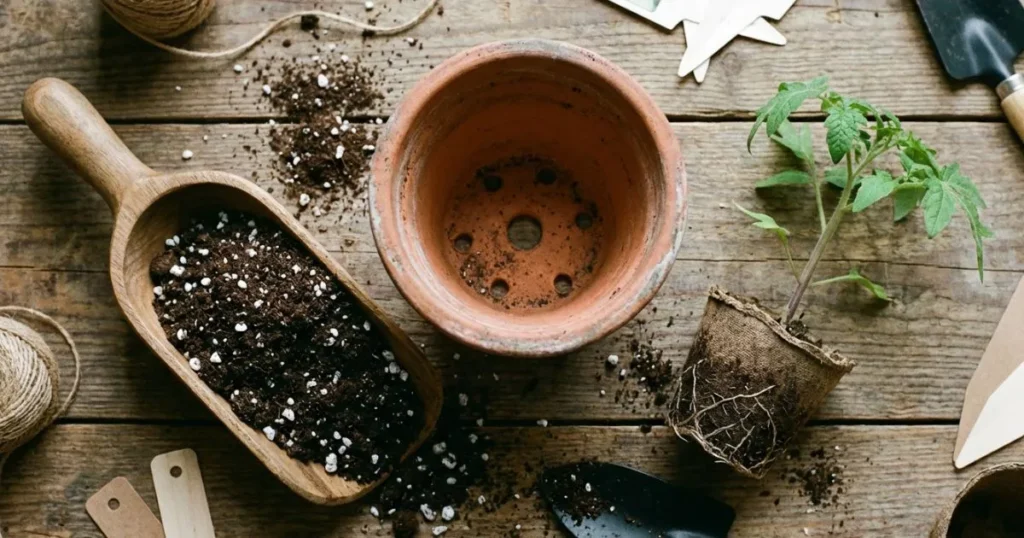
You want a sterile “soilless” potting mix. You can buy high-quality organic potting mix from a garden center, or you can mix your own for superior results. A perfect mix consists of:
- Peat Moss or Coco Coir: This provides the base and holds moisture.
- Perlite or Vermiculite: These are the white, popcorn-looking rocks. They are essential for drainage and aeration. Your mix should be at least 20% perlite.
- Compost or Worm Castings: This adds organic matter and nutrients.
Selecting the Right Container
The size of your pot dictates the size of your harvest.
- For Micro-Dwarfs (like Tiny Tim): A 6-inch pot or a 1-gallon container is perfect.
- For Standard Dwarfs: You will want a 3 to 5-gallon pot.
Crucial Tip: Ensure your container has drainage holes. If you use a decorative pot without holes, drill them yourself or use a plastic nursery pot inside the decorative one. If water sits at the bottom of the pot, your indoor tomato plant will develop root rot and die within days.
4. Care and Maintenance of Your Indoor Tomato Plant
You are now the master of this plant’s universe. It relies on you for rain (watering) and food (fertilizer). Establishing a routine is key to preventing stress.
Watering Wisdom
Overwatering is the number one killer of indoor plants. We love them too much, so we drown them.
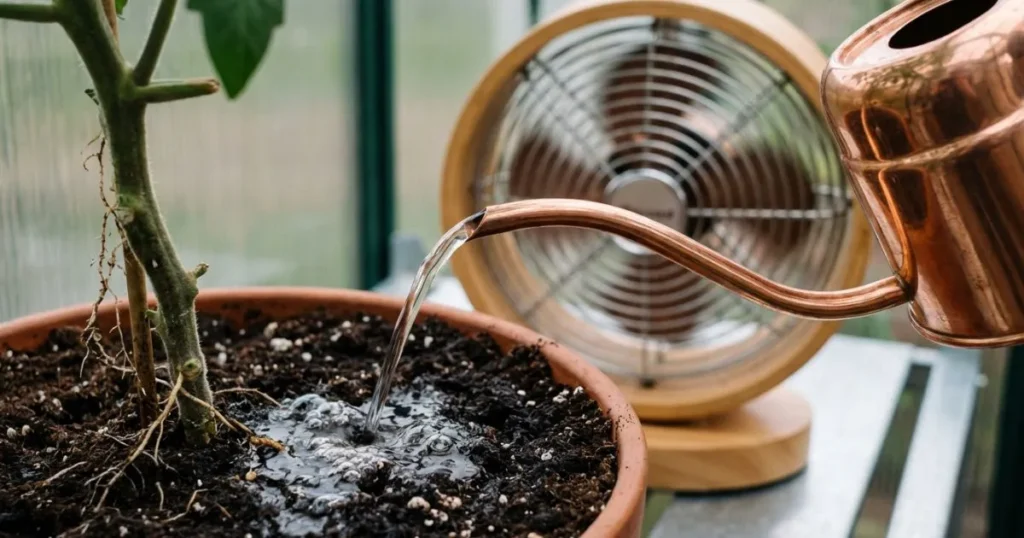
- The Finger Test: Ignore the calendar. Don’t water every Monday just because. Instead, stick your finger into the soil up to the second knuckle. If it feels dry, water thoroughly until liquid runs out of the bottom drainage holes. If it feels cool and damp, wait.
- Avoiding Edema: Have you ever seen bumpy, crystal-like blisters on tomato leaves? That is edema. It happens when the roots take up water faster than the leaves can release it. This is common indoors due to high humidity or lack of airflow. To prevent this, run a small oscillating fan near your plants to simulate a gentle breeze.
Feeding the Beast
Potting soil has limited nutrients. Once the plant uses them up, it will starve unless you intervene.
- Vegetative Stage: When the plant is just growing leaves and stems, use a balanced, water-soluble fertilizer (like a 10-10-10 NPK ratio).
- Flowering Stage: As soon as you see yellow flowers, switch to a fertilizer lower in nitrogen and higher in phosphorus and potassium (like a tomato-specific feed). Too much nitrogen at this stage will give you a beautiful, giant green bush with zero tomatoes.
5. The Pollination Hustle: Be the Bee
This is the step that most beginners forget. Outside, the wind shakes the plants, and bees vibrate the flowers to release pollen. Inside, the air is still, and (hopefully) you don’t have bees in your kitchen.
If you do nothing, the flowers will bloom, dry up, and fall off without ever producing a tomato. You must become the pollinator.
Methods for Hand Pollination
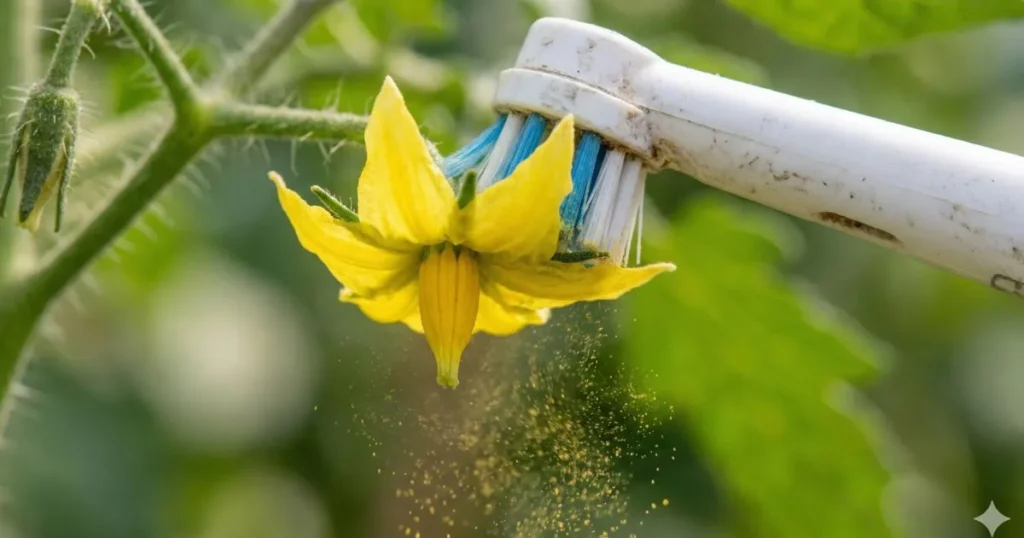
Fortunately, tomato flowers are “perfect,” meaning they contain both male and female parts. They don’t need pollen from another flower; they just need a little vibration to release the pollen inside the bloom.
- The Shake: The simplest method is to gently tap or shake the main stem of your indoor tomato plant once or twice a day.
- The Electric Toothbrush: This is the pro tip that changes everything. Take an electric toothbrush, turn it on, and gently touch the back of the flower cluster (the stem part, not the petals). The vibration frequency of the toothbrush mimics the buzz of a bumblebee’s wings. You might even see a tiny cloud of yellow dust (pollen) fall.
- Timing: Pollen releases best when the humidity is lower, usually around midday. Make it part of your lunch routine.
6. Troubleshooting Common Issues
Even the best gardeners run into trouble. The key is catching it early before it overwhelms your indoor tomato plant.
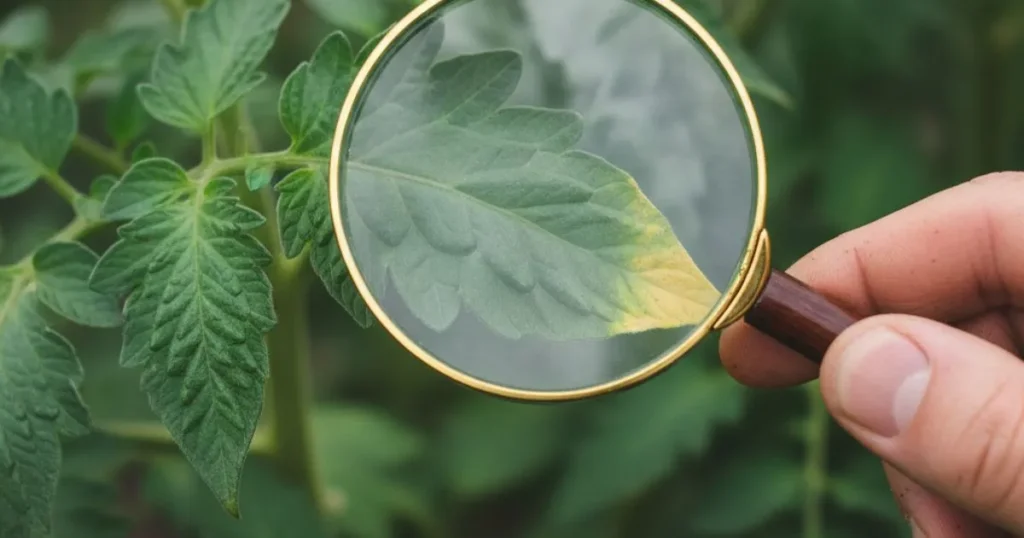
- Yellow Leaves at the Bottom: If the lower leaves are turning yellow and dropping, it is usually a sign of nitrogen deficiency (feed it!) or the plant is becoming root-bound. If the soil is soggy, it could be overwatering.
- Purple Leaves: This often indicates a phosphorus deficiency or that the plant is too cold. Ensure your room temperature is above 65°F (18°C).
- Fungus Gnats: These are tiny, annoying black flies that crawl on the soil. They thrive in wet dirt.
- The Fix: Let the top inch of soil dry out completely between waterings. You can also use yellow sticky traps to catch the adults.
- Aphids: These sap-suckers can hitch a ride on clothing or pets. If you see them, wash the plant gently with soapy water or use Neem oil.
7. Harvest and Culinary Use
After about 60 to 80 days of care, your patience will pay off. The green fruit will blush, turning into vibrant red, orange, or yellow jewels.
When to Pick
Commercial tomatoes are picked green and gassed to turn red. Yours can stay on the vine until they are perfect. A ripe indoor tomato plant fruit should be fully colored and have a slight “give” when you squeeze it gently.
- Flavor Tip: Never refrigerate your homegrown tomatoes. The cold kills the flavor enzymes and turns the texture mealy. Keep them on the counter.
Recipe: Winter Caprese Salad with Basil Vinaigrette
There is no better way to celebrate your success than a dish that puts the tomato front and center. This salad highlights the sweet, acidic punch of your indoor harvest.
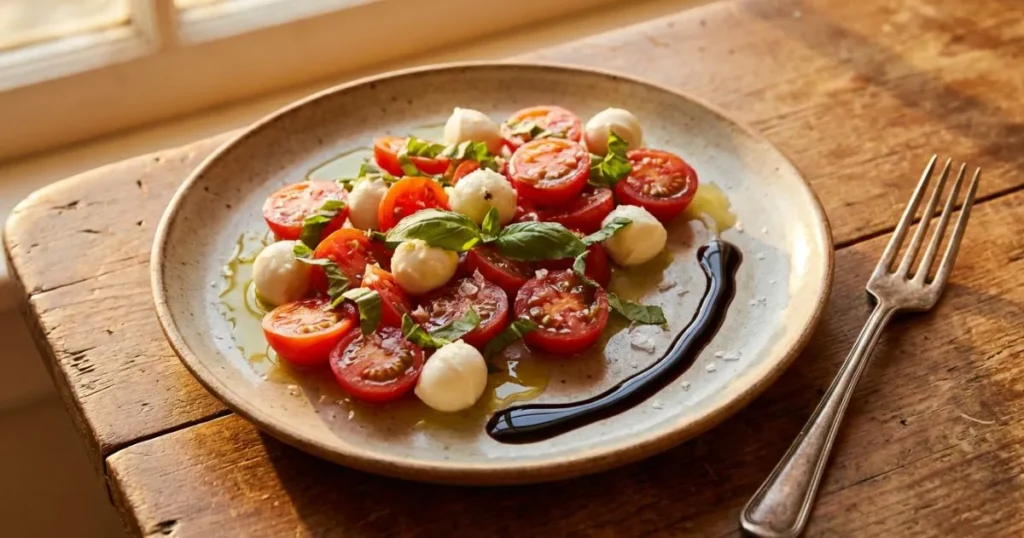
Recipe Ingredients
| Ingredient | Amount | Notes |
|---|---|---|
| Indoor Cherry Tomatoes | 1 Cup | Halved or quartered |
| Fresh Mozzarella | 8 oz | Bocconcini pearls or a sliced log |
| Fresh Basil | 1 Bunch | Roughly chopped (grow this indoors too!) |
| Extra Virgin Olive Oil | 3 tbsp | Use the highest quality you have |
| Balsamic Glaze | 1 tbsp | Thick glaze, not vinegar |
| Garlic | 1 Clove | Minced very finely |
| Sea Salt | To taste | Flaky salt (like Maldon) works best |
| Black Pepper | To taste | Freshly cracked |
Instructions:
- In a small bowl, whisk the olive oil, minced garlic, a pinch of salt, and pepper to create a simple dressing.
- Arrange the mozzarella and your halved indoor tomatoes on a plate.
- Drizzle the olive oil mixture over the cheese and tomatoes.
- Sprinkle the fresh basil over the top.
- Finish with a zig-zag drizzle of balsamic glaze.
- Serve immediately with crusty bread.
FAQ: Common Questions About Your Indoor Tomato Plant
Q: How long does an indoor tomato plant live?
A: Most determinate and micro-dwarf varieties are annuals. This means they have a life cycle: they grow, fruit, and then die. Typically, an indoor plant will produce heavily for a few weeks and then decline. Expect a lifespan of about 4 to 6 months. Once it’s done, compost it and start a new seed!
Q: Why is my indoor tomato plant dropping flowers?
A: This condition, known as “blossom drop,” is frustrating. It usually happens for one of three reasons:
- Lack of pollination: You aren’t shaking the plant enough.
- Temperature stress: It is too hot (over 85°F) or too cold (under 55°F).
- Low light: The plant senses it doesn’t have the energy to support fruit, so it aborts the baby tomatoes.
Q: Can I grow a full-sized beefsteak indoor tomato plant?
A: Technically, yes, but practically, no. A beefsteak plant requires a 5 to 10-gallon pot and massive amounts of light and space. Unless you have a dedicated grow room or a heated greenhouse, sticking to cherry or salad tomatoes will yield much happier results.
Q: What is the best temperature for an indoor tomato plant?
A: Tomatoes love “goldilocks” weather. They prefer daytime temperatures between 70-75°F (21-24°C) and nighttime temperatures that drop slightly, but stay above 60°F (15°C). If you are comfortable in a t-shirt in your home, your tomato plant is likely happy too.
Q: Can I grow tomatoes in a hydroponic system?
A: Absolutely. Tomatoes thrive in hydroponic systems like AeroGardens or Kratky setups. In fact, they often grow faster in water than in soil because nutrients are delivered directly to the roots. Just ensure you are using a nutrient solution specifically designed for fruiting vegetables.
Conclusion
Growing an indoor tomato plant is a journey that mixes science, patience, and a little bit of magic. It transforms a sterile corner of your home into a productive micro-farm. Yes, it requires more effort than a succulent. You have to play the role of the sun, the rain, and the bee. But the first time you bite into a tomato that tastes like actual fruit—sweet, acidic, and complex—while a blizzard rages outside, you will understand why it is worth it.
You are not just growing food; you are cultivating a connection to the natural world that sustains you through the dark months.
Ready to start your indoor garden? Don’t let another winter go by with tasteless produce. Grab some seeds, turn on the lights, and get growing.