7 Expert Tips on Where Do You Plant Rhubarb for the Best Growth (Complete Rhubarb Container Gardening Guide)
Finding the Right Place: A Personal Journey With Growing Rhubarb
When you first ask yourself where do you plant rhubarb, it often comes from a deeper place than simply wanting to choose a sunny spot in the yard. You’re choosing a home for a plant that can live for more than a decade. That realization hits you the moment you watch your first rhubarb stalks appear—thick, red, and determined to break through the cool soil.
I remember standing in my garden one early spring morning, coffee in hand, waiting to see whether my transplanted rhubarb had survived winter. I had moved it the previous fall, unsure if I’d chosen the right location. When I saw the buds pushing up, it felt like the plant was telling me, “Yes… this place works.” That small moment made me appreciate the importance of picking the right spot.
If you’re wondering where do you plant rhubarb—in pots or in the ground—this guide is built to give you clarity, confidence, and practical steps so your rhubarb thrives for years.
Table of Contents
Understanding Rhubarb’s Growing Needs Before Choosing a Planting Spot
Before you decide where do you plant rhubarb, you need to understand the kind of environment it prefers. Rhubarb isn’t delicate, but it is particular about a few things.
What Rhubarb Needs to Thrive
- Cold winters to reset the crown (Zones 3–7 ideal)
- Full sun for strong stalks
- Rich, well-draining soil
- Space to expand its root system
- Stable placement (it dislikes frequent moving)
Rhubarb grows best when its roots stay cool, its crown stays dry, and its leaves get plenty of light.
For more science-backed details, you can explore the University of Minnesota Extension’s rhubarb guide:
https://extension.umn.edu/vegetables/growing-rhubarb
Where Do You Plant Rhubarb in Containers (Best Location Choices)
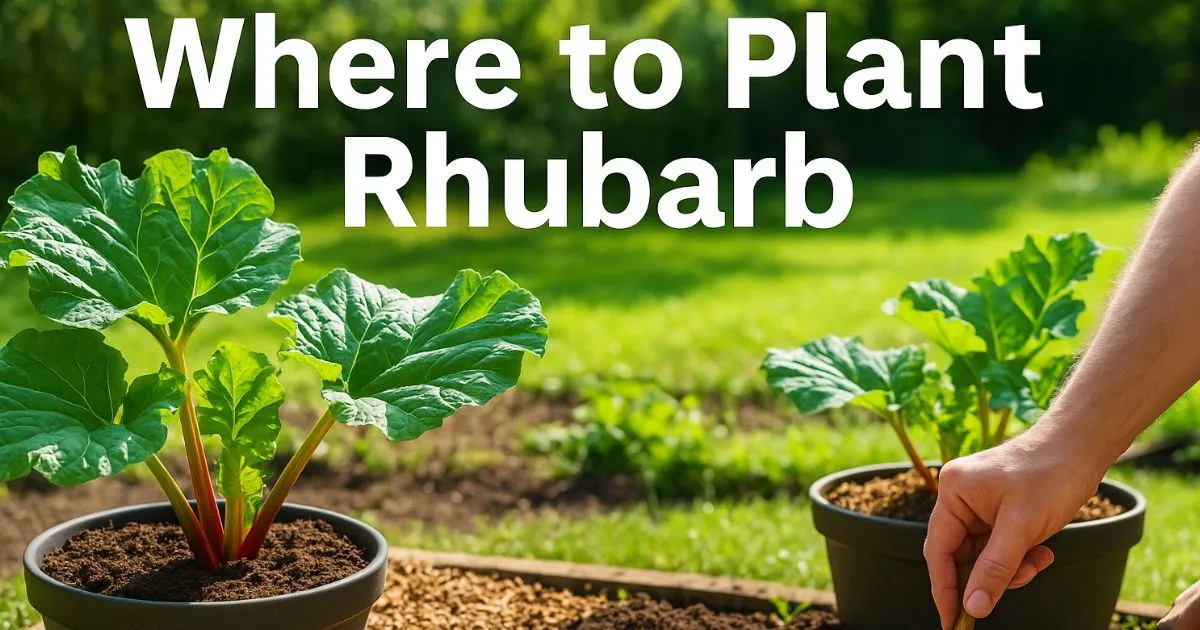
If you don’t have a yard—or if you simply prefer container gardening—rhubarb adapts beautifully to life in pots. But the container’s location is everything.
Best Outdoor Spots for Potted Rhubarb
You’ll want to place your pot where the plant receives consistent light without overheating.
Ideal placement:
- A south-facing balcony for maximum sun
- A patio corner sheltered from harsh winds
- Along a fence or wall where reflected heat is moderate
- Elevated plant stands so excess water can drain freely
Avoid concrete areas that trap heat; rhubarb prefers cool roots.
Can You Grow Rhubarb Indoors or in a Greenhouse?
Yes, but with a few rules:
- Choose a cool corner with at least 6 hours of light
- Avoid areas near radiators, vents, or warm appliances
- A lightly heated greenhouse works well for winter protection
Indoor rhubarb won’t grow as large, but it will survive and produce lightly.
For more container-placement tips, refer to the University of Illinois Extension:
https://extension.illinois.edu/gardening/container-gardening
Where Do You Plant Rhubarb in the Ground (If Not Using Containers)
If you prefer planting in soil, “where do you plant rhubarb” becomes even more important because the plant will stay there for years.
Ideal In-Ground Location
- Full sun (6–8 hours daily)
- Deep soil with room for roots to expand
- Good drainage—rhubarb hates soggy soil
- 3 feet of spacing between crowns
- Far from tree roots that steal nutrients
The Best Garden Position
A brilliant trick many gardeners use is placing rhubarb on the north end of a vegetable garden, so its tall leaves don’t shade smaller plants.
Where NOT to Plant Rhubarb
Avoid spots that:
- Stay wet or waterlogged
- Have heavy clay soil
- Sit close to large shrubs or trees
- Receive only 3–4 hours of light
For soil placement tips, visit Oregon State University Extension:
https://extension.oregonstate.edu/catalog/pub/em9226
Choosing the Right Container for Rhubarb (If Planting in Pots)
You now know where do you plant rhubarb outdoors, indoors, or in-ground, but your container choice also shapes your success.
Pot Size Requirements
- Depth: 20–24 inches
- Width: At least 18–20 inches
- Volume: 5–10 gallons minimum
- Drainage: Essential
Rhubarb crowns grow big—larger pots lead to larger harvests.
Best Pot Materials
- Fabric pots: Best drainage and root cooling
- Plastic pots: Lightweight and easy to move
- Glazed ceramic: Beautiful and insulating but heavy
Soil Mix for Container Rhubarb
- 50% high-quality potting mix
- 30% compost
- 10% aged manure
- 10% perlite
Soil pH: 6.0–6.8
To test your soil accurately, you can follow Clemson Cooperative Extension guidelines:
https://hgic.clemson.edu/factsheet/soil-testing/
Step-by-Step: How to Plant Rhubarb in the Best Possible Location
Once you’ve decided where do you plant rhubarb, follow these simple steps.
Planting Steps
- Select an ideal location with steady sunlight.
- Prepare container or soil with organic matter.
- Dig a wide hole or fill your pot halfway.
- Place rhubarb crown with buds 1–2 inches below soil.
- Backfill gently to avoid air pockets.
- Water thoroughly after planting.
- Add mulch, keeping it away from the crown.
Positioning Tips for Containers
- Rotate the pot weekly for even growth.
- Keep away from heat-reflective surfaces.
- Use pot risers to prevent waterlogging.
Common Mistakes in Choosing Where to Plant Rhubarb & How to Avoid Them
Even if you think you know where do you plant rhubarb, mistakes can still happen. Here are avoidable ones:
Mistakes to Avoid
- Planting rhubarb in partial shade → leads to thin stalks
- Choosing a wet or swampy area → crown rot
- Using too small a container → root-bound stress
- Planting too close to buildings → shade + heat imbalance
- Selecting a spot with intense afternoon sun → heat stress
How to Fix Poor Placement
- Move container to better light
- Add compost to improve drainage
- Mulch lightly to cool the roots
- Adjust watering based on microclimate
How Location Affects Rhubarb Harvesting & Long-Term Health
Choosing where do you plant rhubarb directly impacts the plant’s productivity and lifespan.
Sun Exposure
- Full sun = thick, flavorful stalks
- Shade = fewer, weaker stalks
Soil Quality
- Rich soil improves taste & vigor
- Mulch helps moisture retention
Microclimates Matter
- Windy spots = torn leaves
- Heat pockets = wilt & stress
- Damp zones = fungal issues
Good placement now saves years of troubleshooting later.
Simple Rhubarb Recipe (With Ingredient Table)
Easy Rhubarb Sauce Recipe
Ingredients Table
| Ingredient | Amount | Notes |
|---|---|---|
| Diced rhubarb | 3 cups | From your fresh container garden |
| Sugar | ½ cup | Adjust sweetness as desired |
| Water | ¼ cup | Prevents burning |
| Lemon zest | 1 tsp | Optional brightness |
| Vanilla | 1 tsp | Optional |
Instructions
- Add ingredients to a saucepan.
- Bring to a gentle simmer.
- Stir occasionally until rhubarb softens.
- Cook 10–12 minutes until sauce thickens.
- Serve warm or chilled.
FAQ About Where Do You Plant Rhubarb
Where do you plant rhubarb for best growth?
In full sun with well-draining soil or in a large container with rich potting mix.
Can you plant rhubarb in full shade?
No—shade leads to poor production.
Where do you plant rhubarb in pots?
On a sunny balcony, patio, raised area, or greenhouse corner with good airflow.
Should rhubarb be planted near other crops?
Place it on the north side of gardens so it doesn’t shade smaller plants.
Where do you plant rhubarb to prevent crown rot?
In elevated, well-drained soil or fabric containers that prevent waterlogging.
Can rhubarb stay in the same place forever?
Yes—if the location is ideal and the crown is divided every 3–5 years.
Conclusion — Choosing the Perfect Spot for Your Rhubarb Journey
When you understand where do you plant rhubarb, you’re no longer guessing—you’re giving your plant exactly what it needs to thrive for the long haul. Rhubarb rewards thoughtful placement with vibrant stalks, reliable harvests, and a presence that anchors your garden year after year.
Whether you’re working with a small patio, a sunny backyard, or a cozy greenhouse, the right location transforms your rhubarb from struggling to thriving.